
The road up from the green strip ends abruptly at a car park, a ticket hall, and a wall of bleached limestone that gives away nothing at all. No pylons, no columns, no standing statues, just a dead-end wadi with numbered steel doors cut into its flanks. Everything that made this place worth three thousand years of robbery is underground behind those doors, and by mid-morning the heat outside them is the main obstacle between you and seeing it properly. The order you do things in matters as much as what you choose to see.
What you are walking into
The Valley of the Kings (Wadi al-Muluk, Luxor's west bank, across the river from the town centre) is a working archaeological site, not a monument you admire from outside. Dozens of royal tombs are cut into the rock here, but only a rotating handful are open on any given day, and the set on the board at the ticket hall this month may not be the set open next month. The base ticket is EGP 750 for a foreign adult, roughly US$15, or EGP 375 with a student card, and it admits you to any three of the open tombs. Three, not four. The count is taken at the barrier, and there is no topping up once you are through, so the most useful thing you can do all day is decide your three while you are still standing in the shade of the ticket hall.
The site runs daily from about 06:00 to 17:00. A small electric tuf-tuf shuttles the few hundred metres from the visitor centre up to the tombs for EGP 20, worth it on the way back rather than the way in, when you are climbing out into full sun. Payment across the site is by card; treat it as effectively cashless and do not arrive assuming a wad of notes will solve anything.
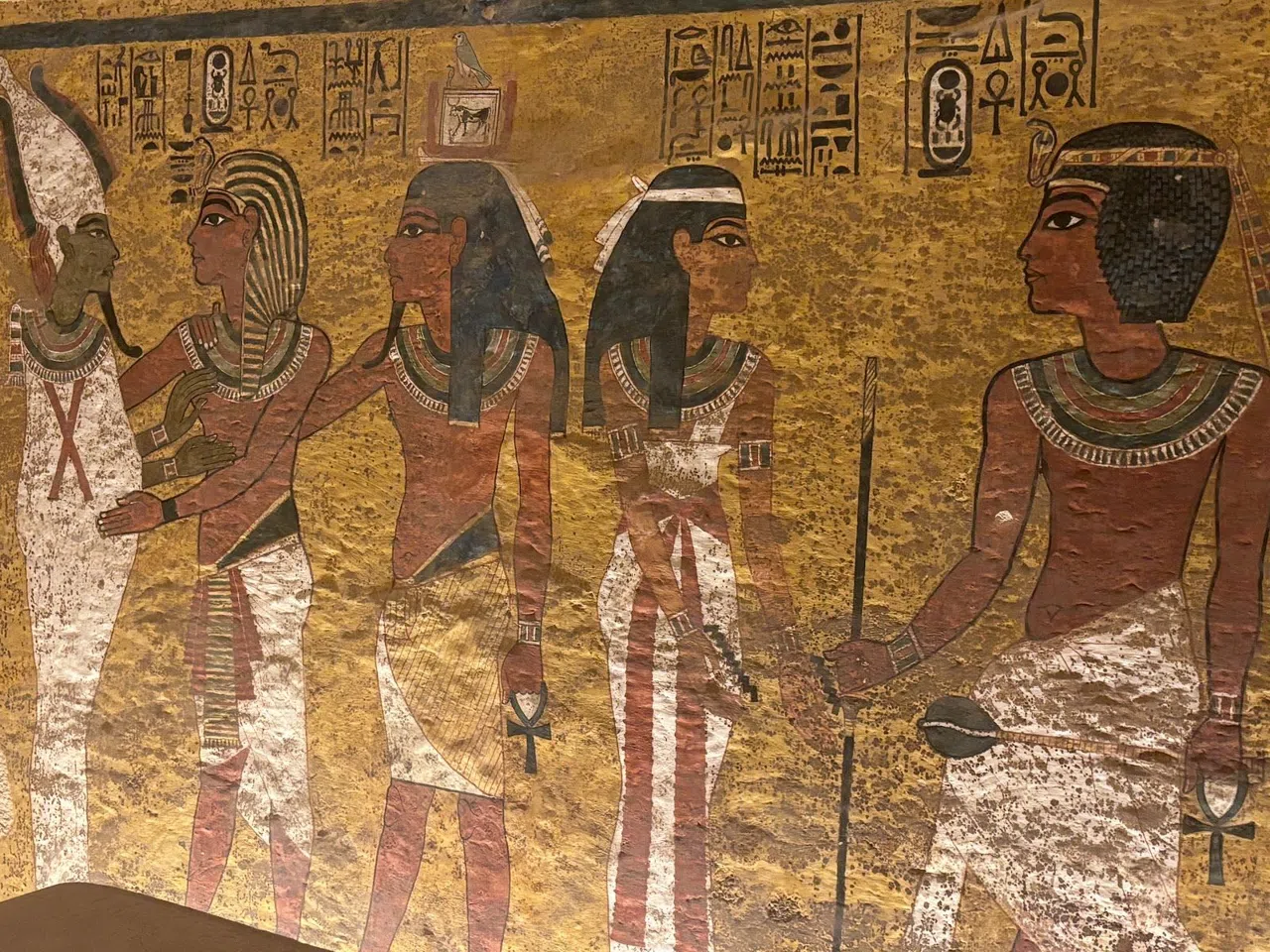
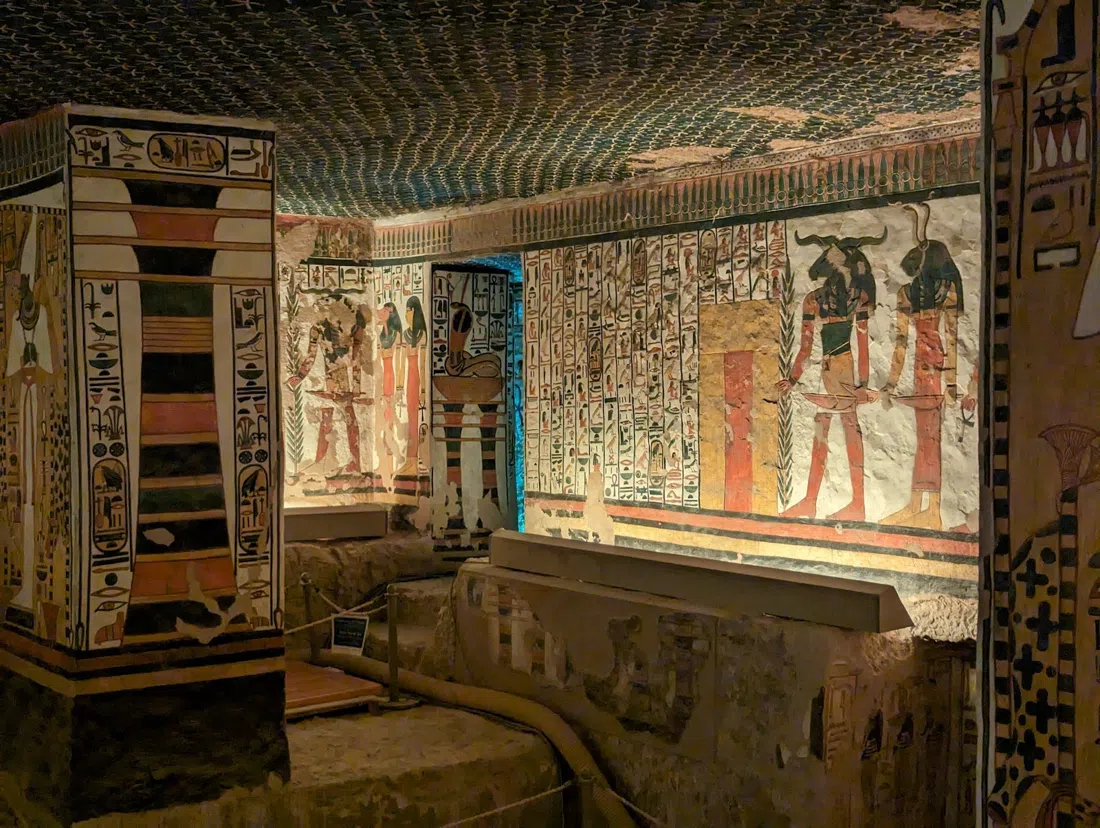
What you actually do is walk down. Each tomb is a sloping corridor driven into the hillside, sometimes a short flight, sometimes a long single-file descent with a wooden walkway over the original steps and a handrail you will use. The air thickens as you go. The walls carry painted and carved text and figures, and in the better tombs the ceiling colour has survived almost intact, which is the thing photographs consistently fail to convey. There is no lighting drama and no interpretation on the walls. Guides may brief you outside, at the model of the valley or at a tomb mouth, but they are not permitted to lecture inside the tombs themselves. That single rule shapes the day: whatever you know before you step through the door is what you take down with you.
Choosing your three
The practical strategy is variety rather than fame. Pick one deep tomb with a long descent, one where the painted ceiling is intact, and one short one you can do quickly when the heat has beaten you. The wardens at each entrance will tell you plainly whether a tomb is busy, and they are usually right.
Big coach parties are here all day, but they do not move as blocks. Because the guide cannot talk inside, large groups split and filter through the tombs in waves, which means the queue you see on the steps clears faster than it looks. If a tomb has thirty people outside it, walk to the next one and come back in ten minutes. Nobody polices the order you use your three.
The two tombs that cost extra
Two tombs are sold separately, on top of the base ticket, and they are not remotely equivalent in value.
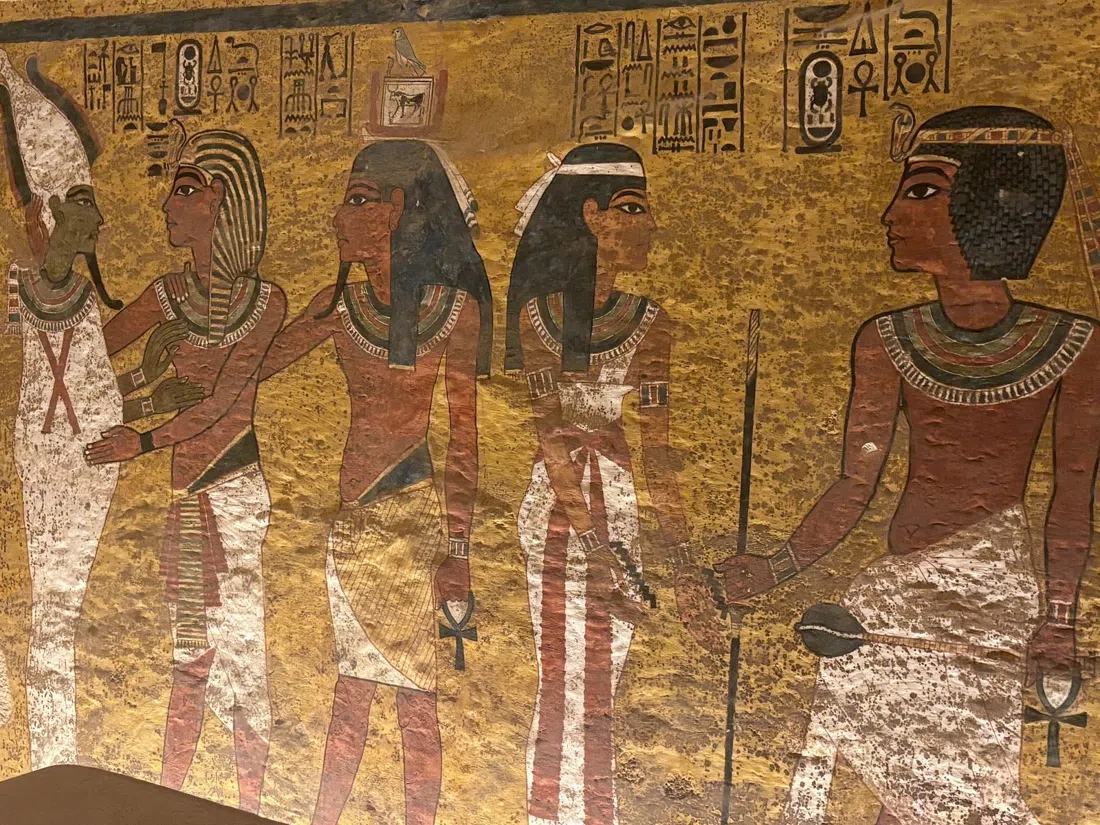
The Tomb of Tutankhamun (KV62, inside the valley) costs EGP 700 extra. It is architecturally the least impressive tomb here and the most expensive per square metre in Egypt: a cramped set of small chambers that was never meant for a king who reigned that briefly. Wardens meter visitors in a few at a time, so groups end up queuing on the steps outside. The one reason to buy it is that the mummy is still in the tomb, in a case, which is not true anywhere else in the valley. If what you want is the decoration rather than the body, you can study a full facsimile of the painted chamber elsewhere on the west bank for a fraction of the price, in air you can breathe.
The Tomb of Seti I (KV17, inside the valley) costs EGP 2,000 extra, card only, and it is the single best reason to spend real money on this site. It is the finest decorated tomb in Egypt: a long, deep, single-file descent through chamber after chamber of carved and painted relief that keeps going well past the point where you expect it to stop. Numbers inside are limited, which is why it is impractical for a full coach and pleasant for two people. Buy this ticket at the visitor centre before you board the shuttle. You cannot pay cash for it, and you cannot buy it at the tomb.
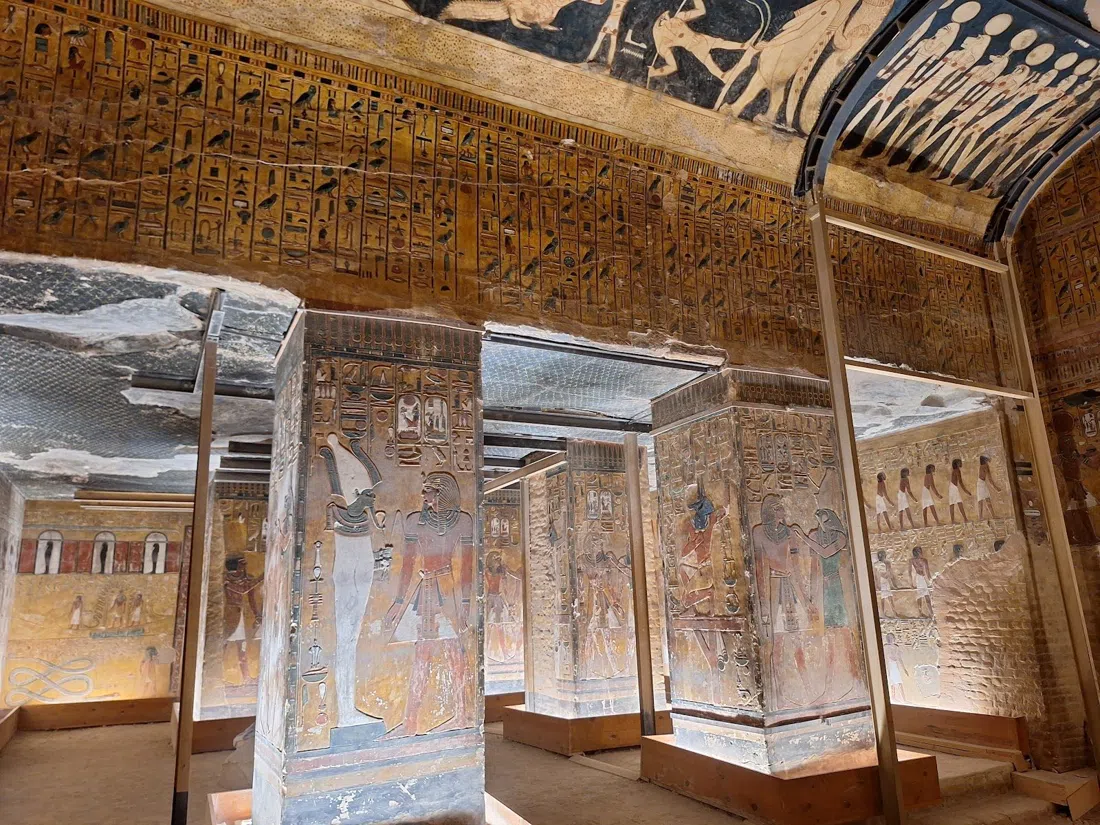
If your budget stretches to one add-on and you care about what is on the walls, it is Seti I, without argument. If you are travelling with children who know the Tutankhamun story and want to see the mummy, KV62 is the one that will land.
The hour that makes the rest make sense
Howard Carter House & Replica Tomb of Tutankhamun (on the valley road below the Dra Abu el-Naga hillside) is about EGP 220 a head, bought at the Antiquities Inspectorate ticket office, and it is the context the valley itself never gives you. The house is the mudbrick dig base Carter lived in through the 1920s seasons, left furnished; the replica alongside reproduces the painted burial chamber at full scale and exact finish. Forty-five minutes to an hour here explains what you are about to look at, and the facsimile lets you read the wall properly without the queue or the trapped heat of the real thing.
Go here first if you can. The rooms are small, so a large party works best split in two, half in the house and half in the replica, swapping over.
How long it takes, and how the day fits together
Allow two and a half to four hours for the valley alone, longer if you have bought Seti I, which deserves an unhurried thirty minutes on its own. Add an hour for Carter House, and a west bank day that starts at 06:00 will have you eating lunch by one with two more sites still possible.
Buying at the gate or booking a guided day
Tickets at the barrier are straightforward and there is no advance-purchase system to navigate: you turn up, you pay by card, you walk down. A guided day buys you logistics and background rather than access, since the guide cannot accompany you into the tombs with a commentary anyway. A driver who knows the site order, sorts the Seti I ticket before the shuttle, and briefs you outside each tomb genuinely saves you an hour of standing about deciding.
Guided west bank days run seven days a week and start from around 89 USD per person, and the bookable options carry 5,421 traveller reviews between them, with the top-rated one at 4.9 out of 5 from 1,738 reviews. Those numbers say the format works; they are not a reason to rush, because the valley is not a place you can be shut out of by arriving without a booking.
Where to eat when you come off the ridge
The only food inside the valley is a small café at the visitor centre, which is why the west bank's eating options matter more here than at most sites.
Carter 1922 Terrace Restaurant (beside Carter House, five minutes from the valley gate) opened in 2025 and runs 06:00 to 18:00, which makes it the one place you can eat before a dawn start as well as straight after the tombs. Roughly EGP 200-500 a head for breakfast or lunch, mid-range by west bank standards, and the open terrace is built for seated groups. Call ahead on +20 100 339 66 32 for a large party.
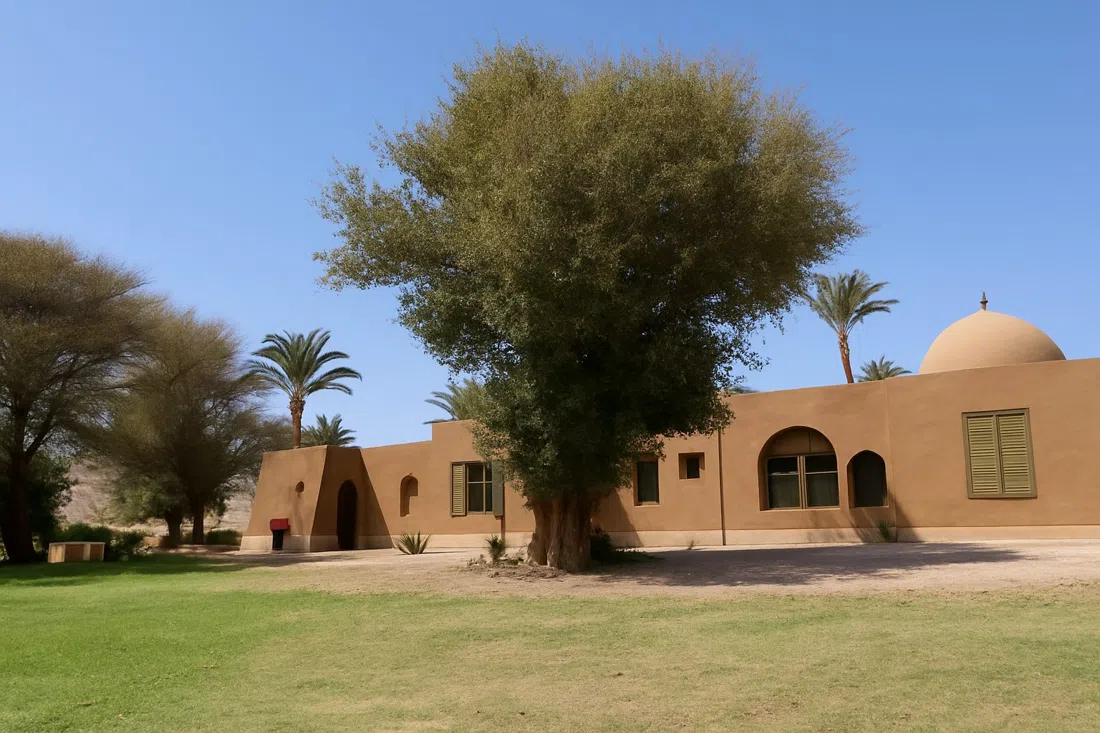
Kings Valley Restaurant (on the valley approach road) is the closest proper sit-down meal to the entrance, set up for tour parties coming off the valley road and generally fine for walk-in groups. Budget to mid, around EGP 150-400 a head.
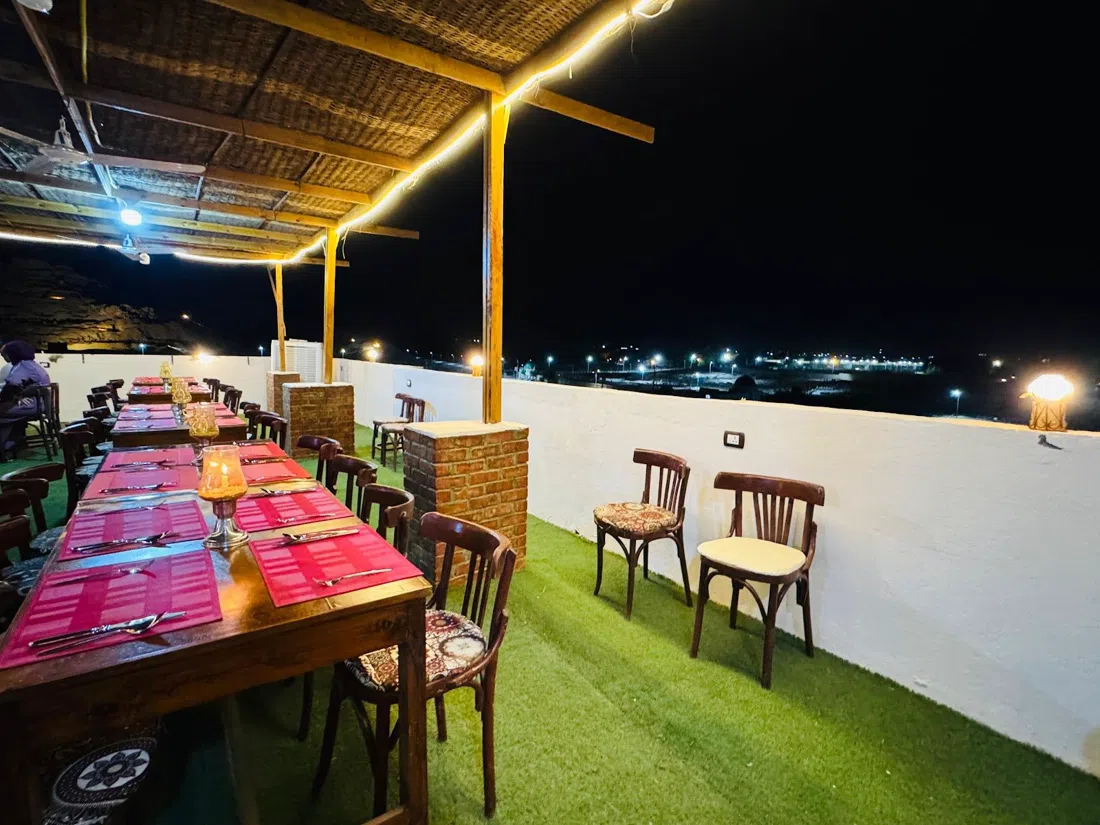
Café & Restaurant Maratonga (Kom Lolah, beside the Medinet Habu temple wall) is the oldest café-restaurant on the west bank and the reliable lunch stop if you are pairing the valley with an afternoon temple. Similar money, roughly EGP 150-400, open from about 06:00 to 20:00. It also runs cooking and baking workshops for anything from one person to twenty with notice, which is a better use of the dead hot hours than a hotel pool.
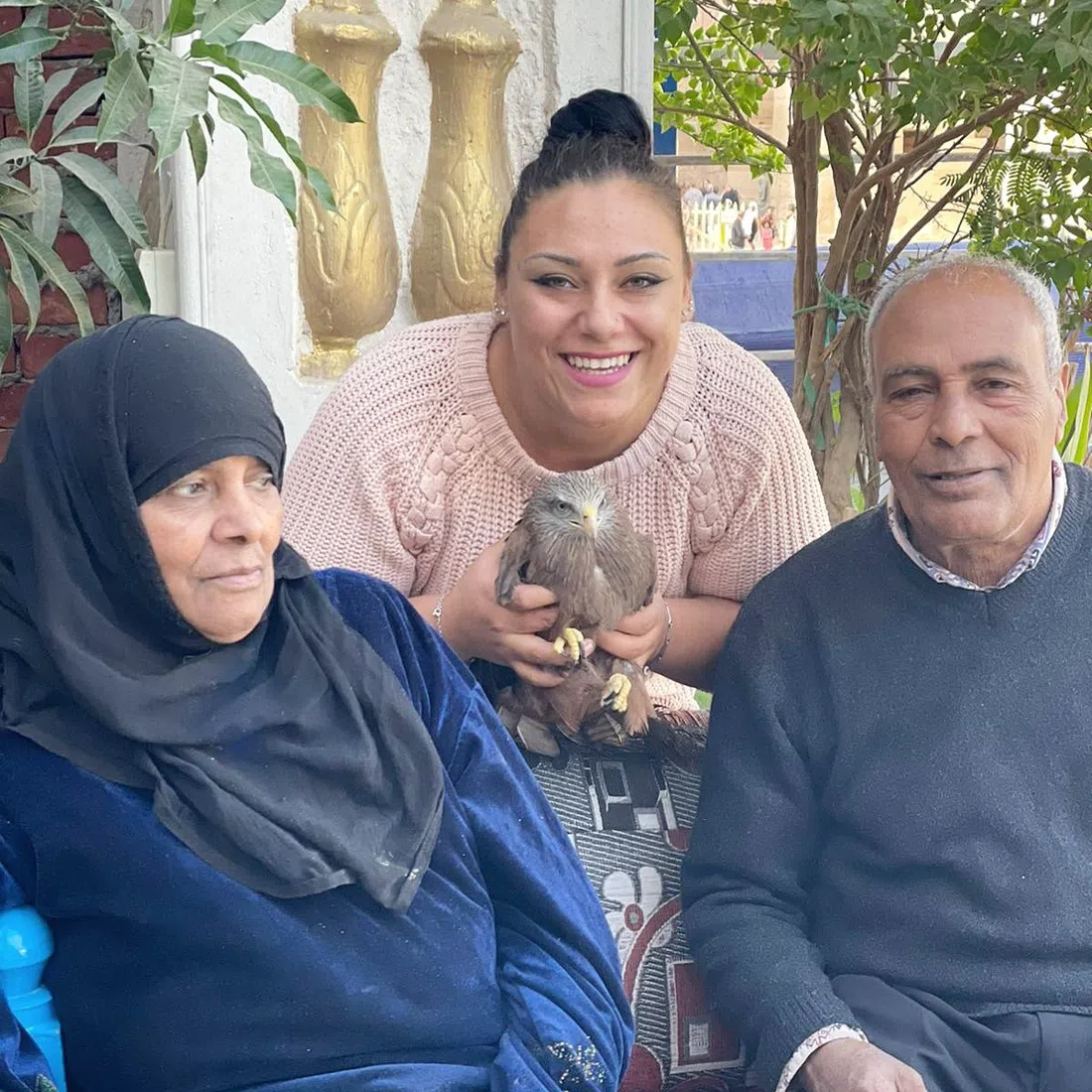
Marsam Hotel garden restaurant (Old Qurna, in the fields below the tombs) is the most interesting meal on this side of the river. It is a century-old former excavation house with no fixed menu: the kitchen cooks whatever came out of its own garden that morning, served in a courtyard under trees, around EGP 250-500 for the set daily lunch. It is small and quiet by design, so book, and accept that a coach-sized party is a poor fit here.
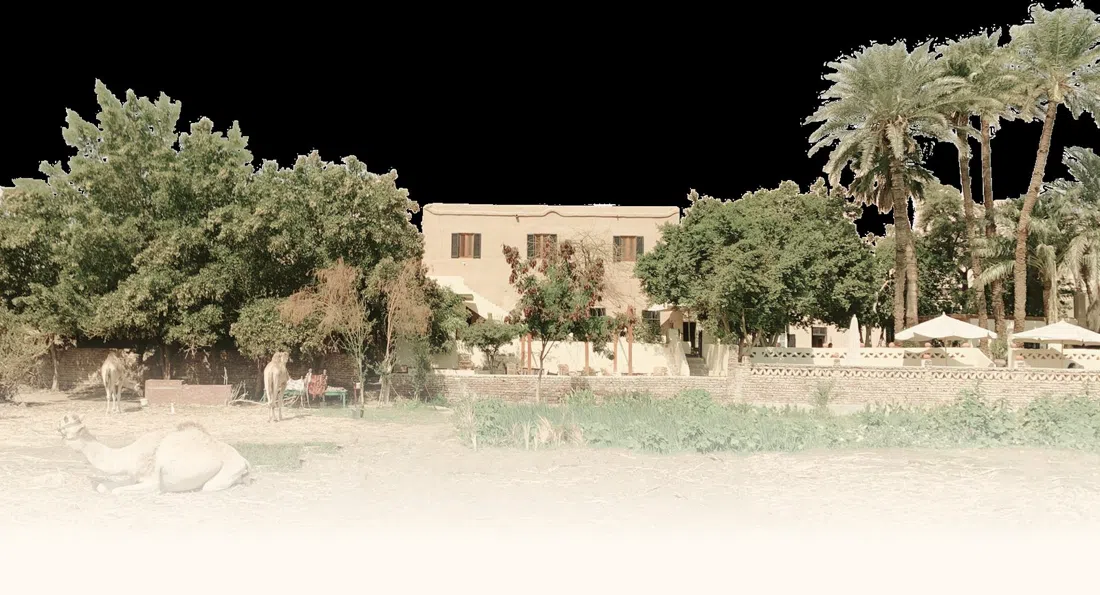
Nile Valley Hotel rooftop restaurant (Gezira, by the public ferry landing) is the obvious end to the day if you crossed on the ferry: about fifteen minutes' drive from the tombs, budget money at roughly EGP 150-350 a head, beer available, and the river view doing most of the work. The roof holds a decent-sized party, but message ahead for more than about ten.
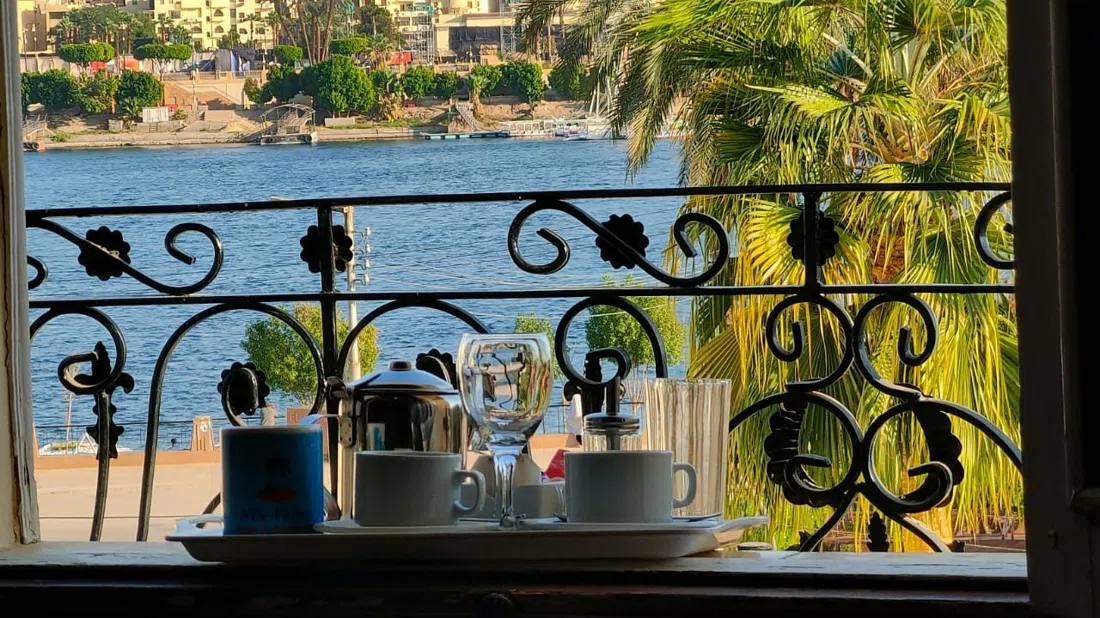
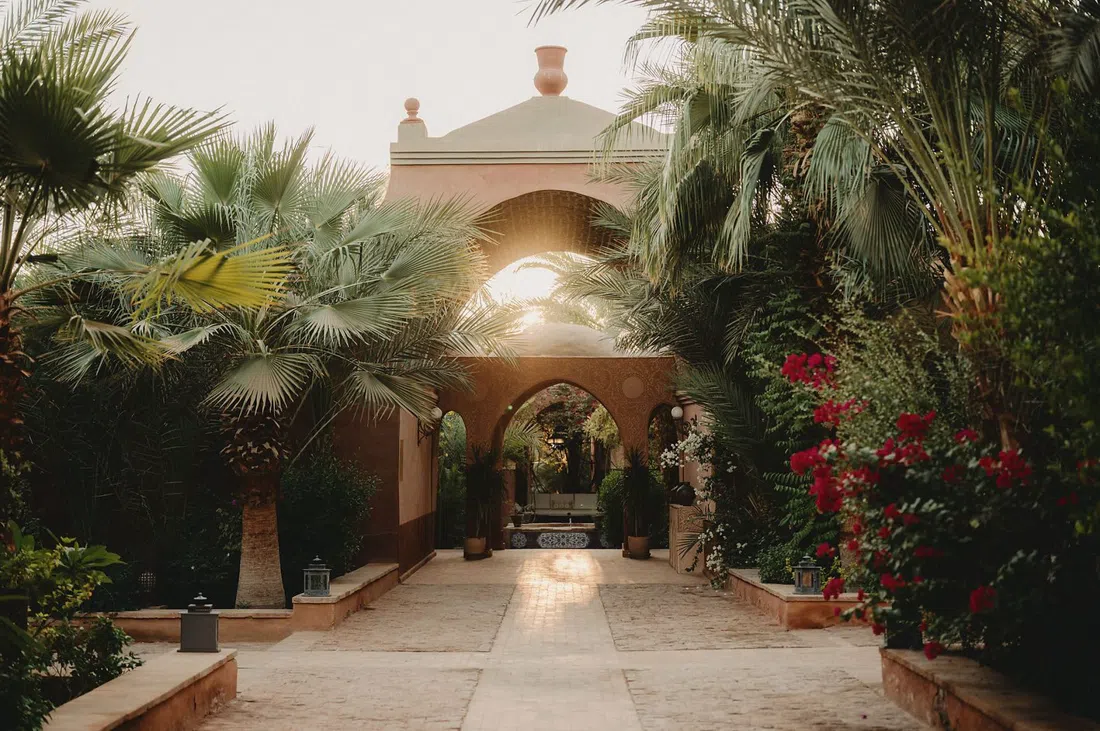
Al Moudira Hotel (out past Medinet Habu) is the one genuinely upscale table and bar near the valley, and the most expensive on the west bank. Dining is listed as residents-only, so non-staying visitors and groups must arrange it in advance; the hotel does stage private dinners for parties of up to about a hundred. Call before you turn up. Walking in unannounced is how people end up disappointed at the gate.
What to put either side of the valley
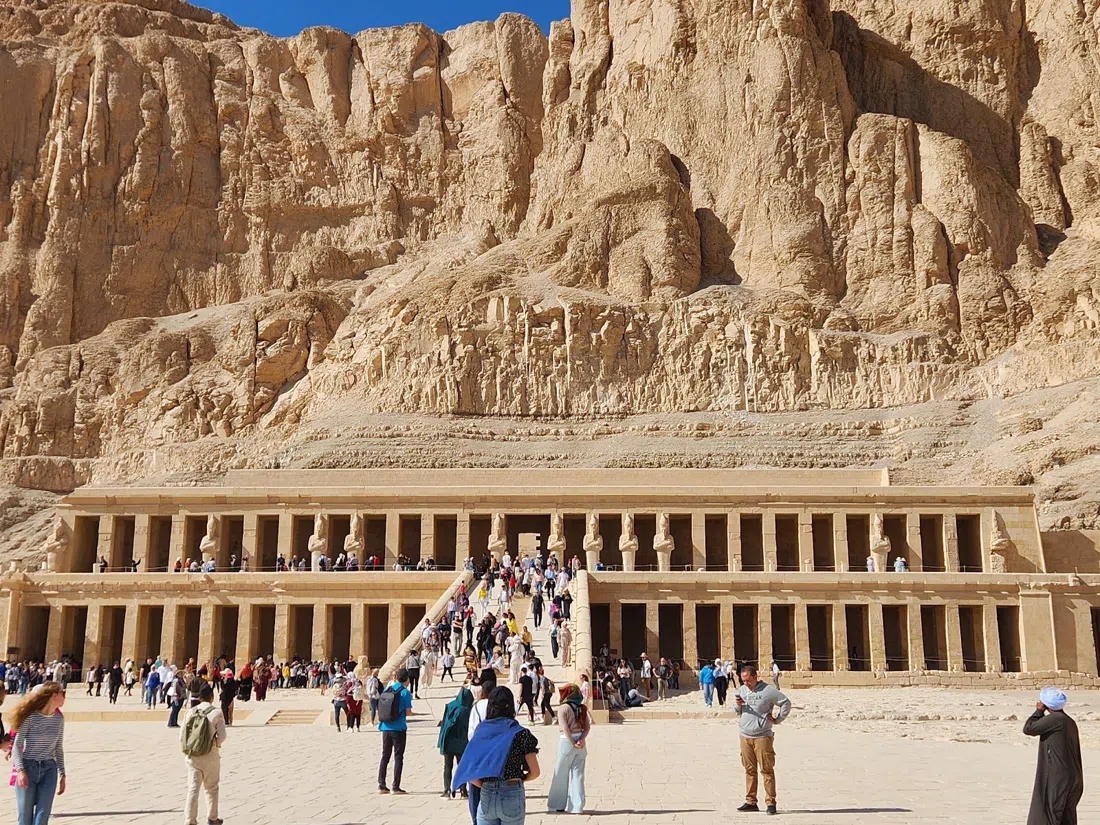
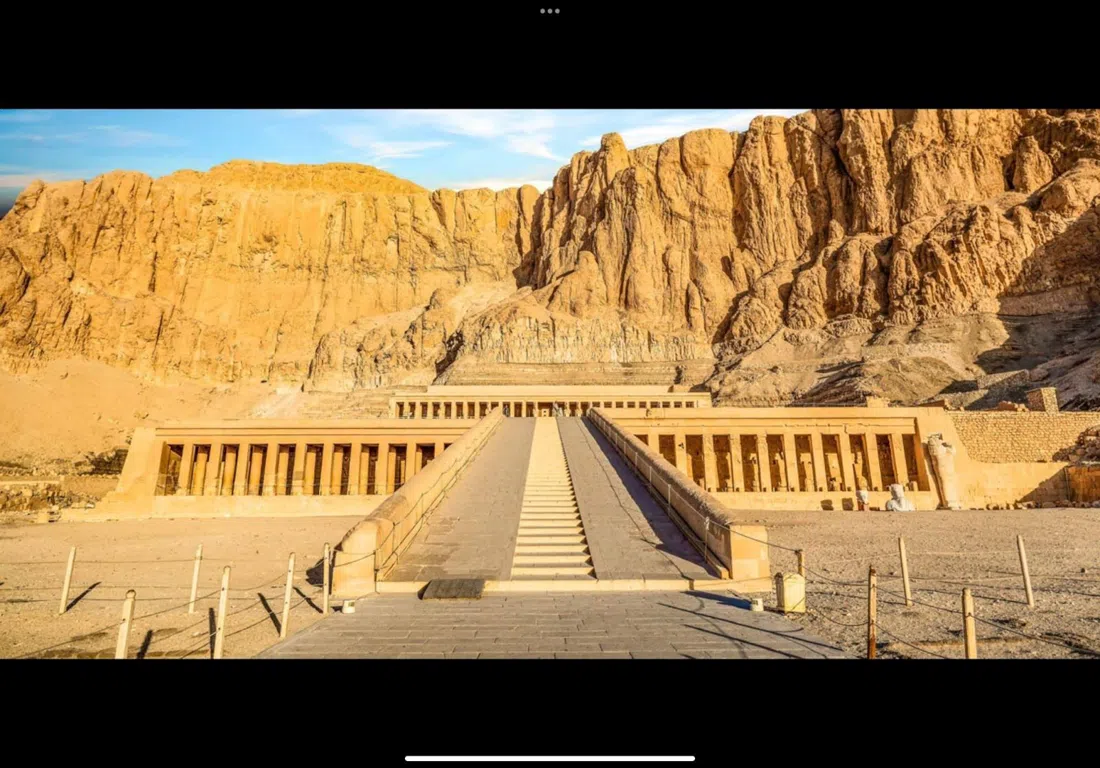
Temple of Hatshepsut (Deir el-Bahari, ten minutes over the ridge) is the natural second stop: EGP 440 foreign adult, EGP 220 student, open roughly 06:00-18:00 in summer and an hour less in winter. The terraces absorb large groups easily, but they are a stone sun-trap with almost no shade, so this is a first-thing site, not a mid-morning one.
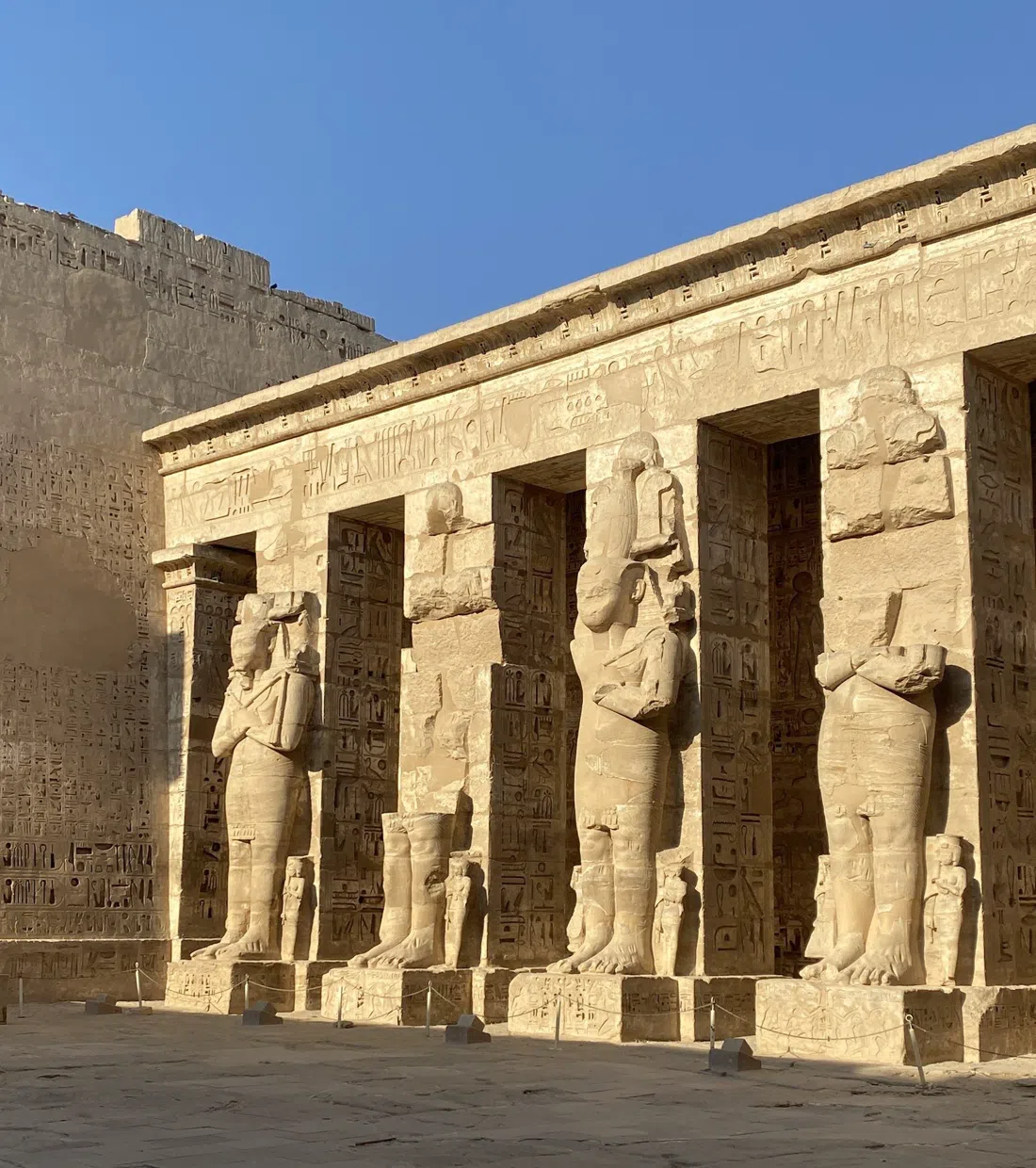
Medinet Habu (Kom Lolah) is the most underrated thing on the west bank, a vast, largely empty temple complex at around EGP 220, open daily from about 06:00 to 17:00, with surviving painted colour on the ceilings that you will not see in the tombs. Far less congested than the royal valley and the best afternoon pairing with it.
Valley of the Queens & Tomb of Nefertari (QV66, south of the royal valley) costs about EGP 220 for the valley, with Nefertari sold separately at roughly EGP 2,500 for a visit capped at around ten to fifteen minutes. It is the best-preserved painting in Egypt, sold with a stopwatch attached. Worth it if colour is specifically what you came for; skippable if you have already paid for Seti I.
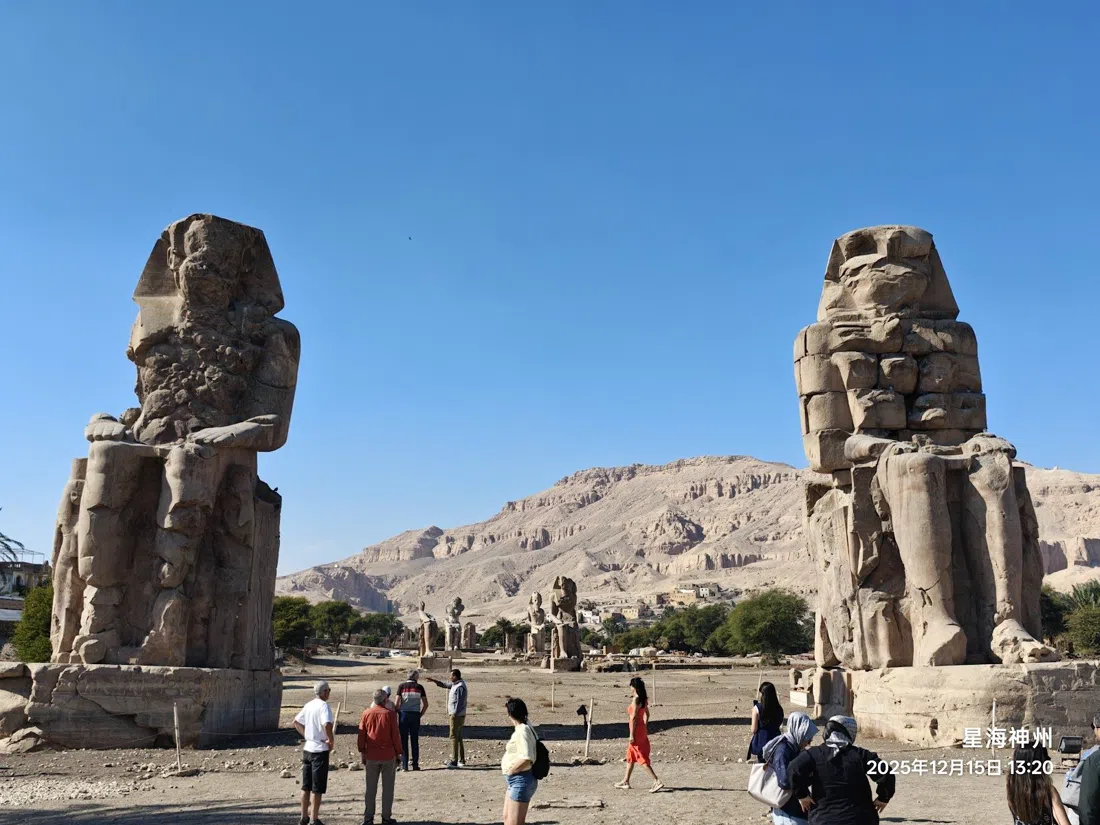
Colossi of Memnon (Kom el-Hettan, on the main road) has no gate, no ticket and no queue, so coaches pull straight in. It is free and takes ten minutes. The interesting part now is the Amenhotep III temple excavation behind the statues, which keeps producing new colossi.
Starting the day in the air
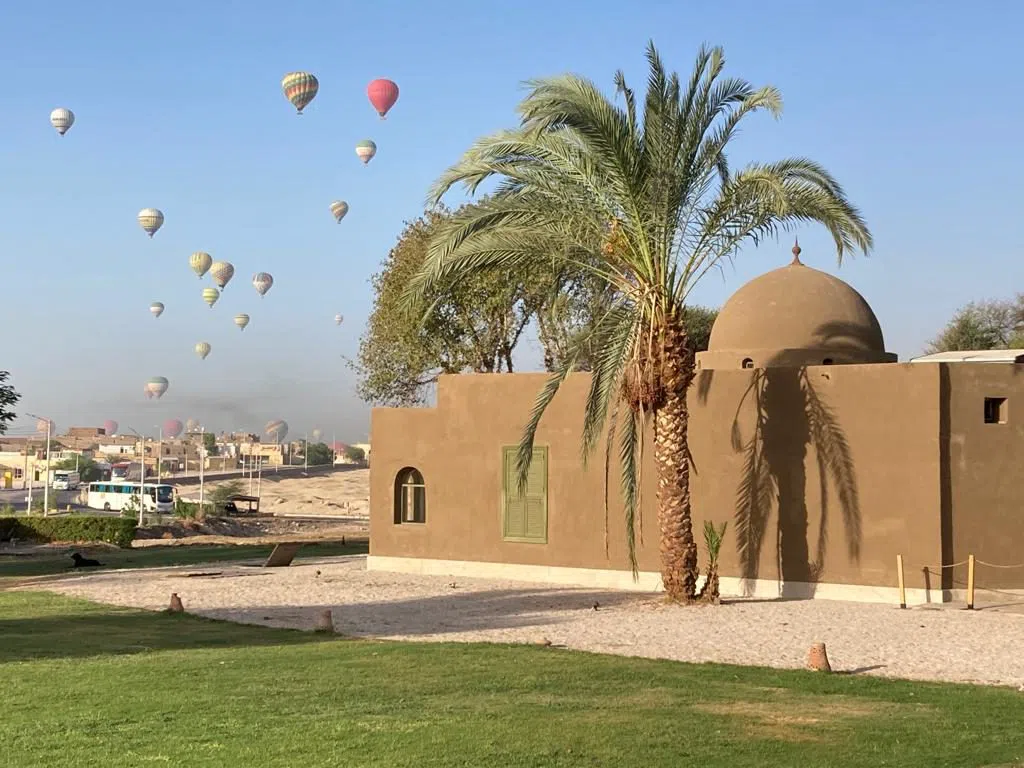
Sindbad Balloons (launch fields on the west bank flats) has been flying since 2005 with ECAA-licensed pilots. Standard baskets take up to about 28 people, comfort baskets cap at 20, and private charters exist; prices start around €100 per person standard and €120-150 for the smaller baskets. Pickup is about 05:30 and you land in time to be at the valley gate as it opens, which is the single best way to sequence the day: the flight, the tombs in the cool, breakfast on a terrace, a temple after lunch.

Best time to go
Go at opening, around 06:00. That is the difference between a good visit and an endurance test. The stone stores heat, the tombs are unventilated, and by ten the descents are noticeably harder work. The second-best window is the last ninety minutes before the 17:00 close, when the coaches have gone, though you lose the option of a long lunch afterwards.
Seasonally, the cool months are the comfortable ones and also the busy ones; the deep summer months are quiet for the obvious reason, and if you come then you should treat anything after about nine in the morning as unusable outdoors. Day of the week matters far less than time of day here. Guided west bank days run seven days a week, and the valley's rhythm is set by coach arrivals, not by the calendar.
Is it worth it
Yes, with one condition: you have to prepare. Turn up cold, pay EGP 750, walk into three tombs with no idea what the registers on the walls are saying, and you will come out having looked at a lot of coloured stone in the heat. Spend an hour at Carter House first, pay for Seti I, and it becomes one of the few sites that lives up to a lifetime of reputation.
It suits anyone with a real interest in what they are looking at, couples and small parties most of all, and families with children old enough to handle enclosed spaces and a steep walk. People with mobility problems get the least out of it: the descents are long, stepped and unavoidable, and there is no way to see the interiors without them. Anyone who wants a guided narration in the room will also be disappointed, because the rule against lecturing inside means you read the walls yourself either way.
Practicalities
Getting there: the west bank is reached by the public ferry from the corniche, which is cheap and quick and lands you at Gezira, or by road over the bridge south of town. From the landing it is a taxi or a hired car to the valley; agree the day rate and the waiting time before you set off, because you will want the same driver for Hatshepsut, Medinet Habu and lunch.
Cash: the valley is effectively cashless and the Seti I ticket is card only, so carry a working card. Most restaurants on the west bank are the reverse, so carry EGP notes as well, in small denominations.
Timing: 06:00 start, tombs first, Hatshepsut before the terraces heat up, lunch, then Medinet Habu in the afternoon. Nothing about this order is negotiable if you want to enjoy it.
Budget: a basic day is EGP 750 for the valley plus EGP 220 for Carter House plus EGP 20 for the shuttle, with lunch at EGP 150-500. Add EGP 2,000 if you take Seti I, EGP 700 if you take Tutankhamun, EGP 440 for Hatshepsut and about EGP 220 for Medinet Habu. A guided day with transport starts from around 89 USD per person.
Staying: the west bank keeps you ten minutes from the gate for a 06:00 start, while the east bank puts you nearer the restaurants and the night ferry; compare both on the Luxor hotel search, and the wider Luxor guide covers the temples on the other side of the river.