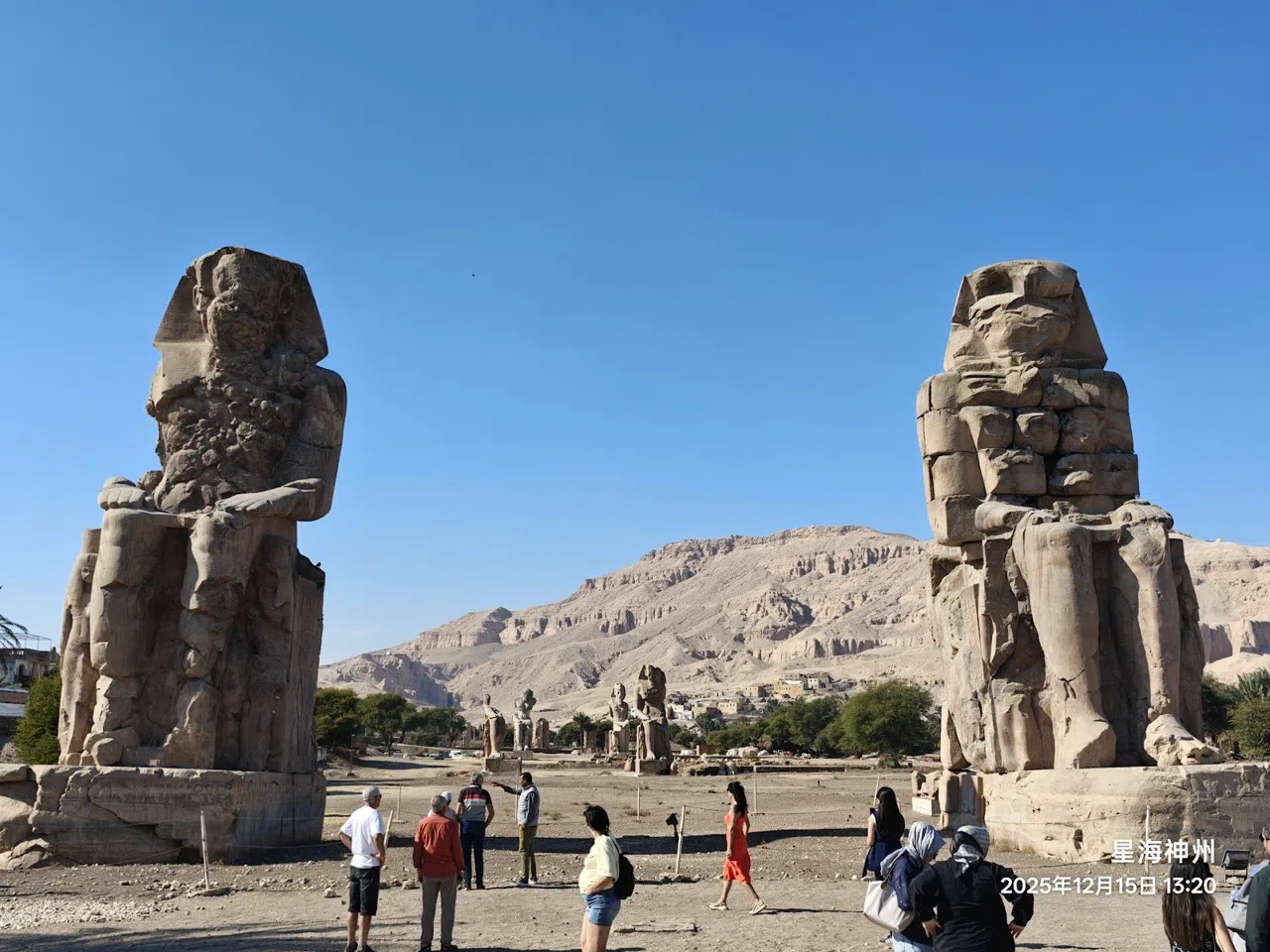
Two seated quartzite figures, roughly eighteen metres of them, sit in a stubbled field a few hundred metres off the main west-bank road, their faces worn down to something closer to weather than a portrait. Most visitors get ten minutes here, because the statues are the first thing a driver passes on the way to the ticketed tombs and the day has a schedule to keep. That is worth correcting: since December 2025 a rebuilt temple stands behind them, and several of the best kitchens on this side of the river are a few minutes' drive away.
The two kings and the temple that vanished
The Colossi of Memnon (west-bank road, Kom el-Hettan) are both the same man, Amenhotep III, seated, hands flat on his knees, staring east across the floodplain towards the river. Look at the legs rather than the faces and you will find the smaller figures carved beside them: his mother and his queen, at roughly knee height, which tells you the scale better than any measurement does. They were never meant to stand alone. They were the gateway pylon of the largest mortuary temple ever built on this bank, and everything between and behind them has been gone so long that generations of travellers assumed the statues were the monument.
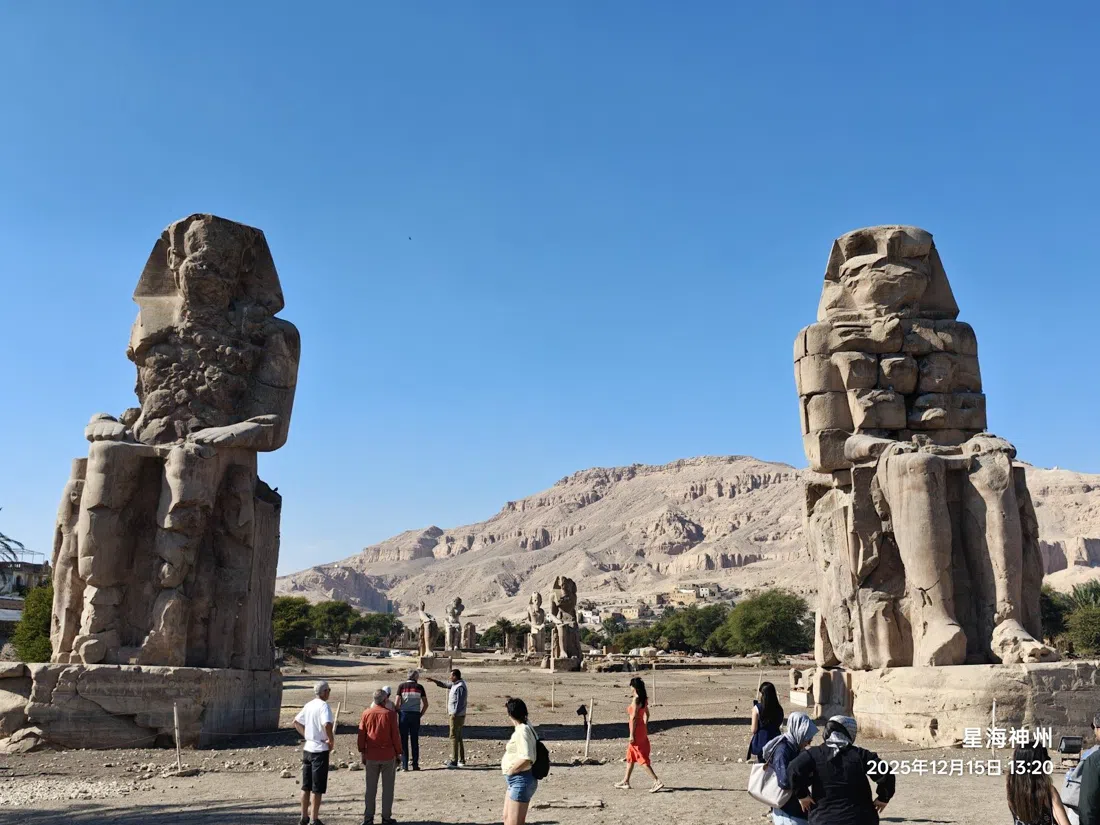
The temple's problem was where it was put. Built low on the floodplain, it took the annual inundation year after year until it collapsed into mud, and later rulers treated the ruin as a quarry with the stone already cut. What survived was the two hardest objects on the site.
The name is a misunderstanding that stuck. Greek visitors decided the northern statue was Memnon, the king killed by Achilles and son of the dawn goddess, and the identification was helped enormously by the fact that the statue made a noise. An earthquake in 27 BC cracked it; afterwards, at sunrise, it gave off a sound that visitors described as a note or a struck string, almost certainly dew evaporating out of the fractured stone. Roman tourists came specifically to hear it and carved their names and verses into the legs, which is why the base of the northern colossus carries some of the oldest visitor graffiti you will ever stand in front of. Around AD 199 the emperor Septimius Severus had the statue repaired, and it never sounded again. Be honest with yourself about what you are looking at now: severe erosion, no faces to speak of, and a repair job nearly two thousand years old that is visible in the upper courses if you know to look for it.
What changed behind the statues in 2025
For most of the last thirty years the ground behind the Colossi was a working excavation with fragments laid out in rows. That work has now produced something you can walk into. The Mortuary Temple of Amenhotep III (Kom el-Hettan) (immediately alongside the Colossi lay-by) reopened its re-assembled colossal statuary on 13 December 2025, the result of an Egyptian-German mission under Hourig Sourouzian that spent close to three decades lifting, matching and re-erecting broken stone.
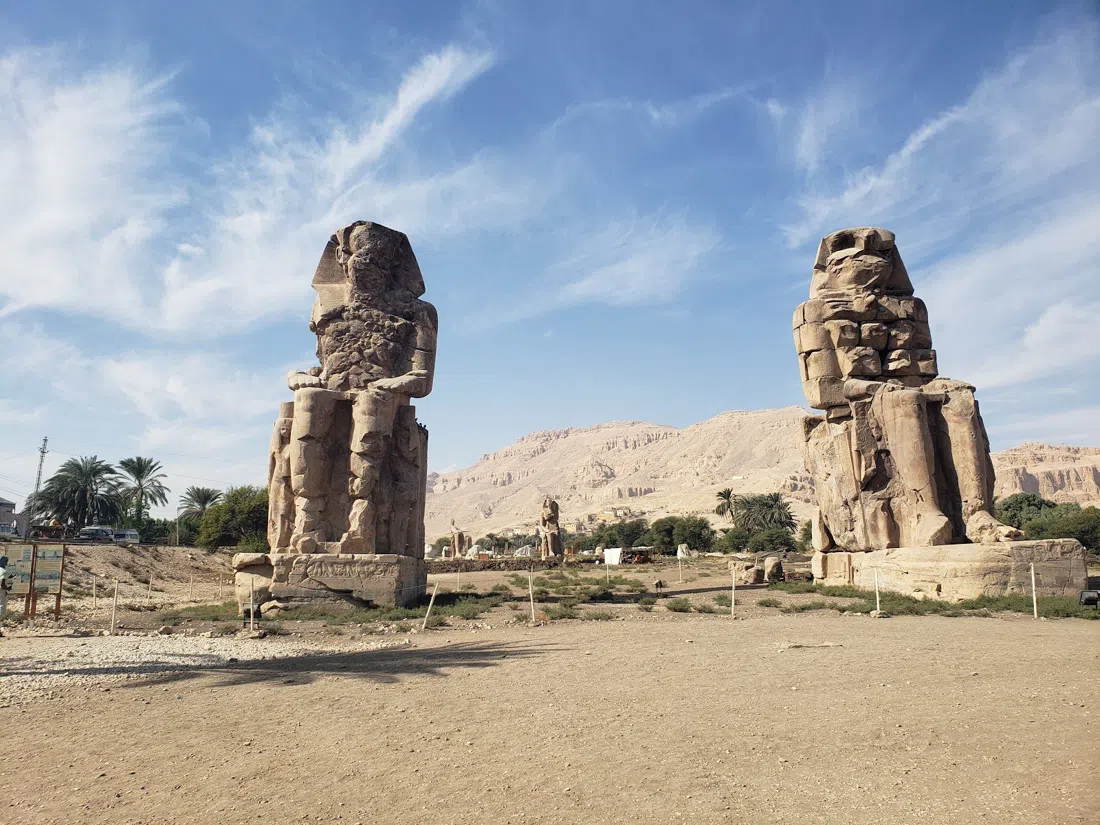
The practical consequence is simple. Until recently this stop was two statues and a photograph. Now there is a temple forecourt behind them with re-erected figures standing at something like their intended height, and the axis of the building is readable on the ground. It sits in the EGP 100-220 band that the west bank charges for its secondary sites, and the forecourt where the Colossi themselves stand stays free.
Guides, in my experience, still allot ten to fifteen minutes to the whole stop, because the itinerary was written before the temple existed. Say at the start of the day that you want half an hour here. It is an easy request and drivers are used to it.
How long it actually takes
Five minutes gets you the photograph from the lay-by. Fifteen gets you both statues, the Roman inscriptions on the northern one, and a walk around to the back, where the unfinished, rougher carving on the rear slab is more interesting than the front. Forty-five to sixty minutes covers the statues plus the temple behind, at a pace where you can actually look at things.
If you are building your own day rather than taking someone else's, an hour here at the start, before the heat arrives, is the right allocation.
No gate, no ticket and the hawkers that come with it
There is no entrance, no ticket desk and no capacity limit at the Colossi. Coaches pull straight onto the roadside lay-by and everyone walks in. That is the appeal, since this is one of very few major monuments on this bank with zero admission, and it is also the whole of the downside. No gate means no shade, no toilets and nowhere to buy water at the stones themselves.
It also means the sellers work the lay-by rather than a queue. Scarves, alabaster, postcards, offers to take your photograph. They cluster around large parties, so a coach group gets a great deal more attention than two people out of a taxi. Decide before you open the car door whether you are buying anything; a polite, firm no in Arabic, repeated once and then not discussed, works far better than a conversation. Nobody is aggressive, but a tour bus emptying out is a crowd, and the pressure is proportional to the size of it.
The ground rules are the obvious ones: the excavation areas behind are fenced where they need to be, the statues are not to be climbed, and you should assume there is no lavatory between here and your next ticketed site.
Door prices against a booked day out
Because the Colossi are free, the money question is really about everything else in the day. The temple behind falls in that EGP 100-220 band. The bigger ticketed sites nearby are EGP 220 for an adult and EGP 110 for a student, with much lower rates for Egyptians. Add a car with a driver for half a day and you have the independent version.
The booked version is a full-day guided run of the west bank and it exists seven days a week, Monday through Sunday, starting from 89 USD per person. Those tours carry 6,330 traveller reviews between them, with the top-rated one at 4.9 out of 5 from 1,737 reviews. What you are buying is transport, a licensed guide and the sequencing of the day. It is not queue-jumping, because at the Colossi there is no queue and no gate to jump. If you have already sorted a driver and you are comfortable reading a site on your own, you can do this stop for nothing. If you want the temple explained by someone who knows which fragment came from where, pay for the guide.
Breakfast, the balloon crowd and the six o'clock openings
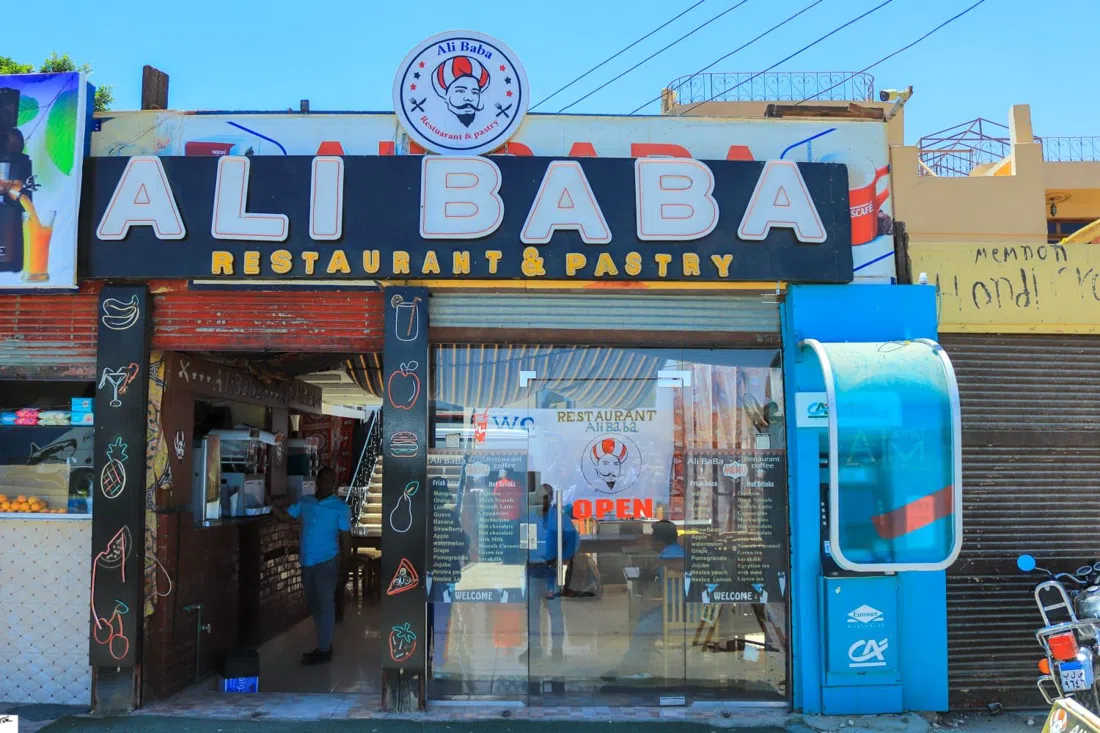
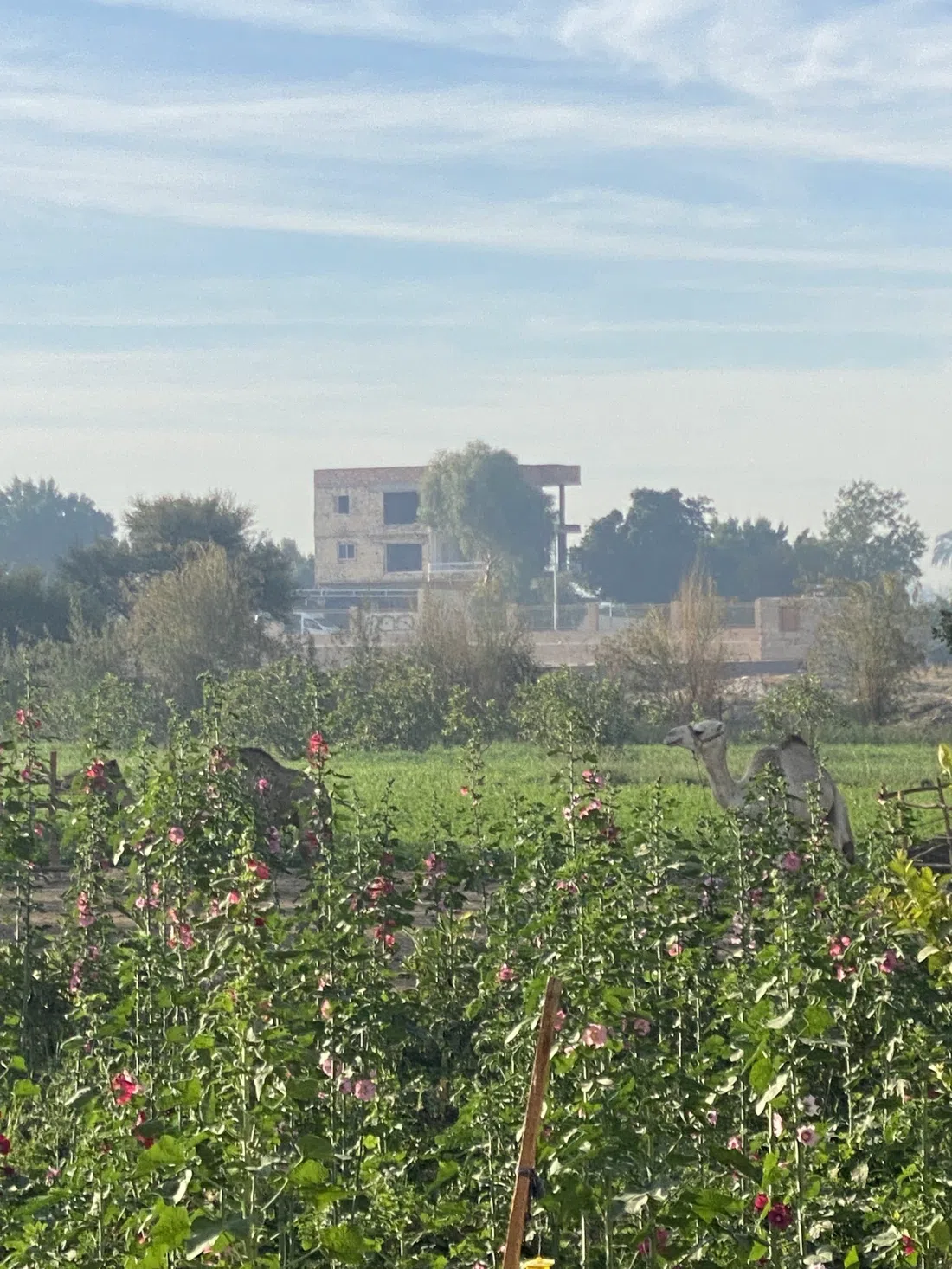
The west bank's best food trick is that its early risers open before the monuments do. Ali Baba Restaurant & Cafe (west bank, minutes from the Colossi) opens at 06:30 and is set up for balloon-flight groups coming down at dawn, which makes it the most useful breakfast on this side of the river and the closest proper sit-down meal to the statues. Mains run roughly EGP 120-250, cards are accepted, and walk-ins are fine, but phone ahead on +20 150 162 9002 for a table of ten or more, because large parties land here in waves.
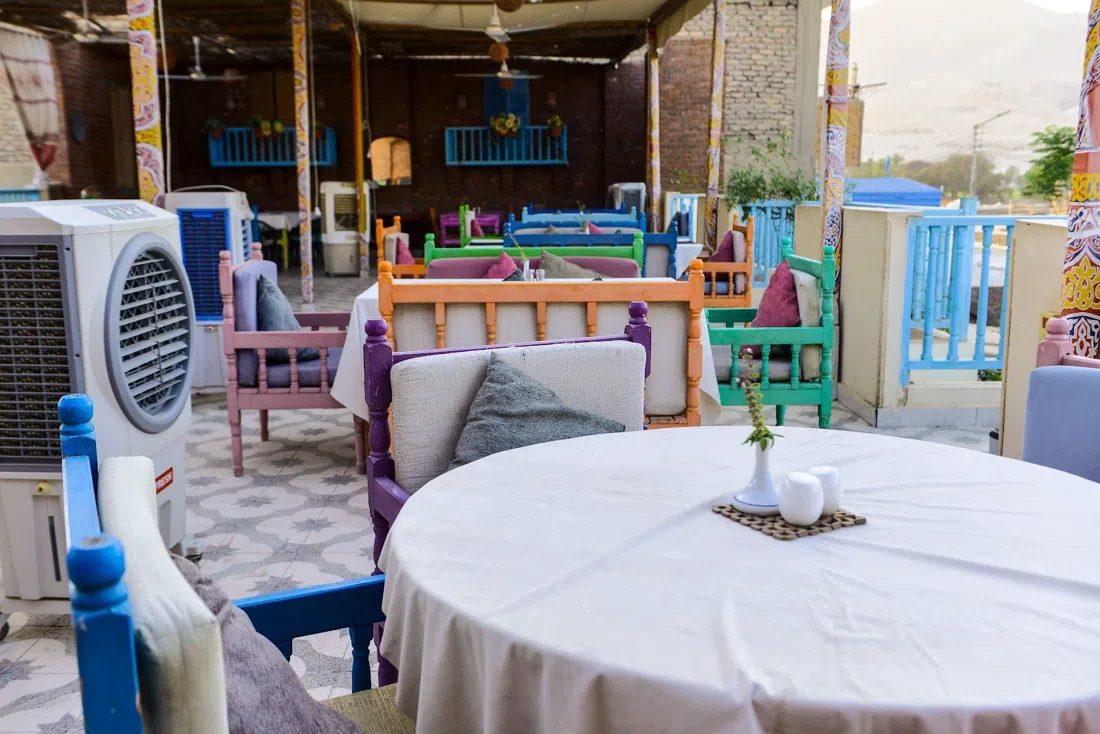
If you would rather eat while looking at the thing you came for, Memnon Guesthouse, Restaurant & Cafe (directly opposite the monument) is open 06:00-23:00 and run by the owner, Hassan, himself. Juices and tea cost a few pounds, tagines are roughly EGP 100-200, and it is a small family operation: comfortable for couples and parties up to eight or ten, and a phone call on +20 100 414 4346 for anything bigger. This is the one to choose if you want to sit with the Colossi for an hour rather than photograph them for five minutes.
Lunch within ten minutes of the stones
Marsam Hotel Garden Restaurant (Kom el-Hettan, a short hop inland) is the interesting lunch. The building is a hundred-year-old former excavation house that became a hotel in 1939, and the kitchen has no fixed menu: it cooks what the hotel garden and the Lake Nasser fish run have produced that day. Expect roughly EGP 510-1,300 a head for the spread. Non-residents are welcome, but groups should email [email protected] in advance so the kitchen can cook to numbers, because turning up ten-strong and expecting a menu is not how this place works.
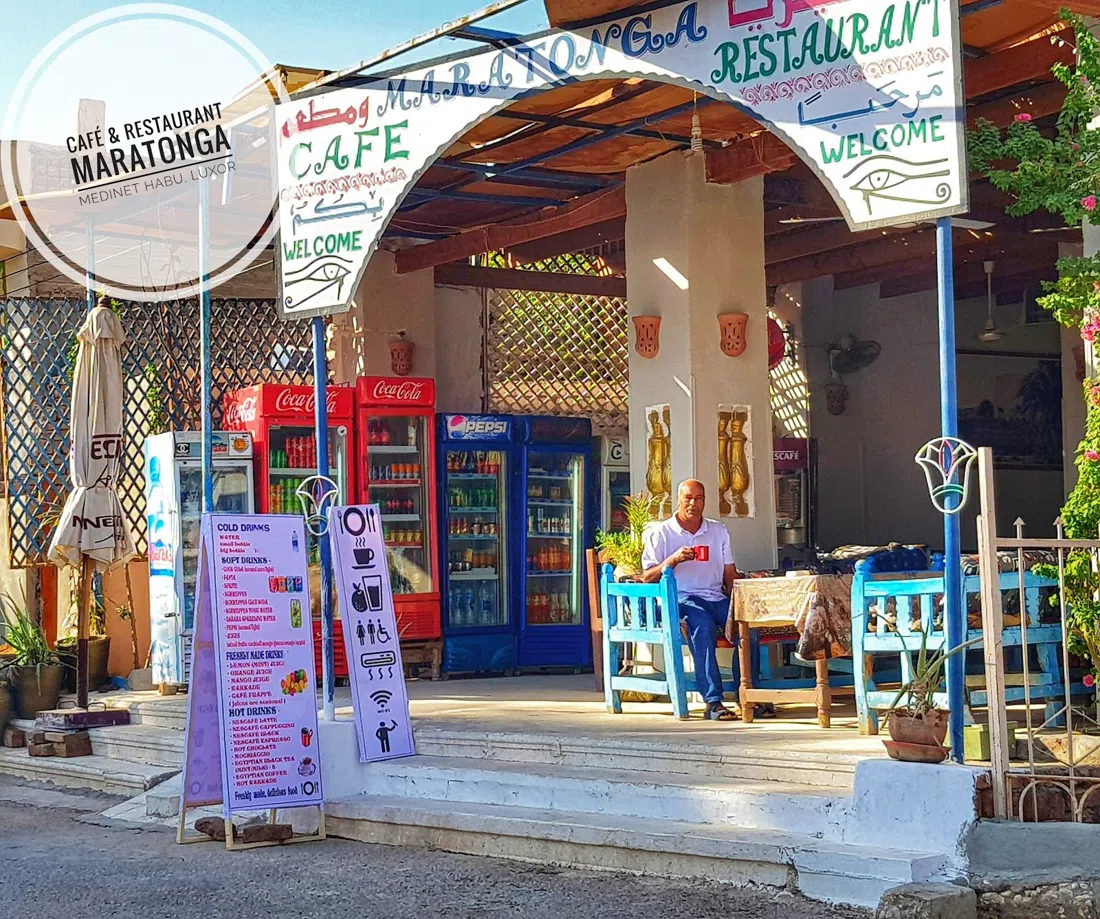
Café & Restaurant Maratonga (opposite Medinet Habu) is a German-Egyptian family kitchen with a small garden, open 06:00-20:00, with coffee, juice and light plates in the EGP 50-180 range. It is the one west-bank stop that genuinely handles dietary requirements, with gluten-free and vegan cooking and baking workshops, rather than shrugging at them. The garden is small, so a handful of people is fine and larger tables need arranging on +20 103 295 5774 or [email protected].
Ramesseum Rest House (mid-west-bank, beside the Ramesseum) is not a restaurant and does not pretend to be. It is run by the Abd el-Rassoul family (Mohamed took over from his father Mahmoud) and it remains the most reliable place to find a cold beer between sites. The food list is deliberately short and cheap. Come for the drink and the shade, not the meal, and note that drivers park groups here between temples, so it can fill and empty quickly.
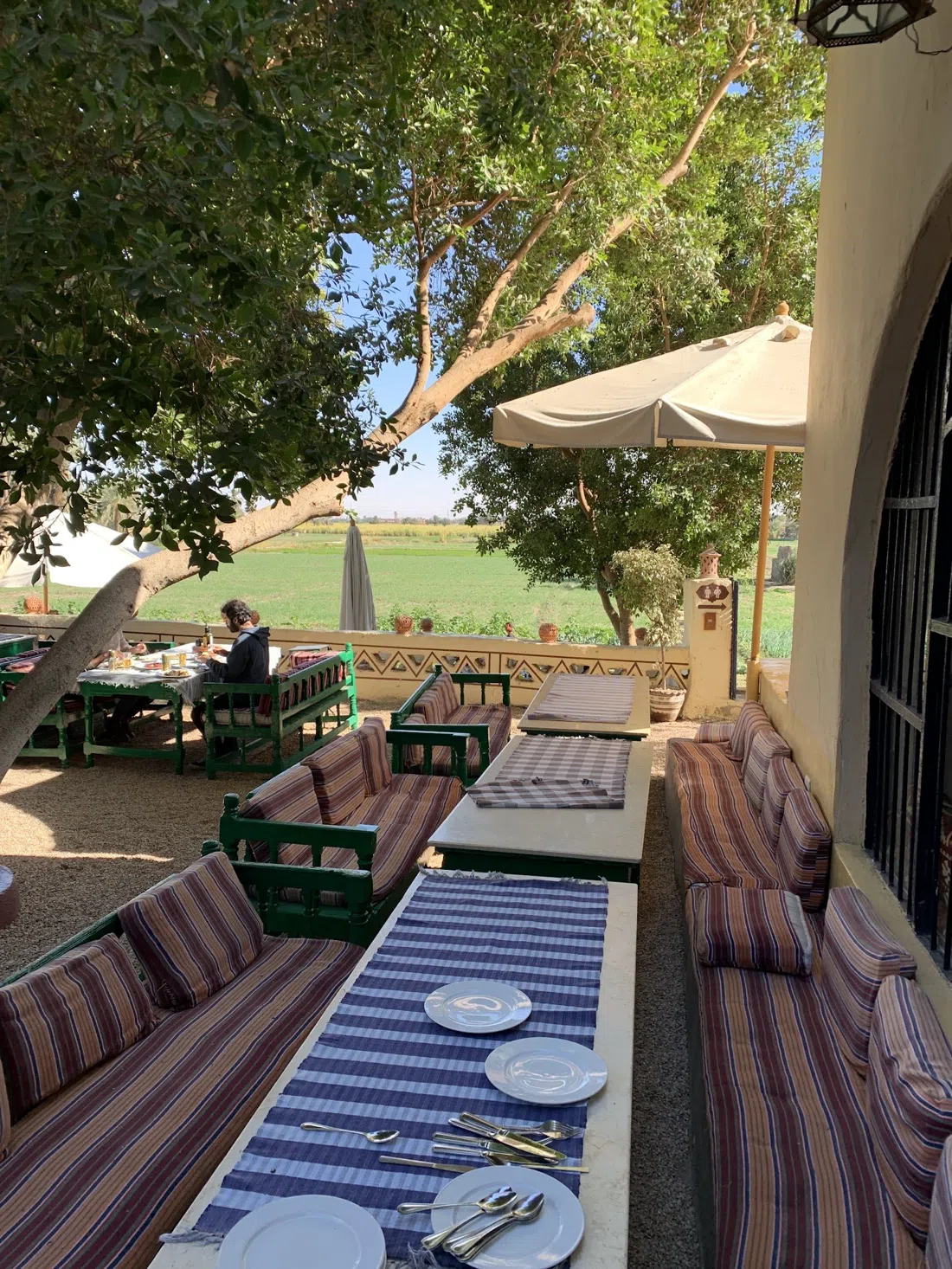
Nour El Gourna (Gournah, about 700m from the Colossi) is close enough to walk to, which on this bank is unusual. Ten mudbrick rooms and a garden, set Egyptian dinners roughly EGP 300-600 a head, and roast duck and molokhiya cooked the way a local kitchen cooks them rather than the hotel version. Book it as a dinner in its own right. The kitchen needs notice for a large party and it is wasted squeezed into a temple day.
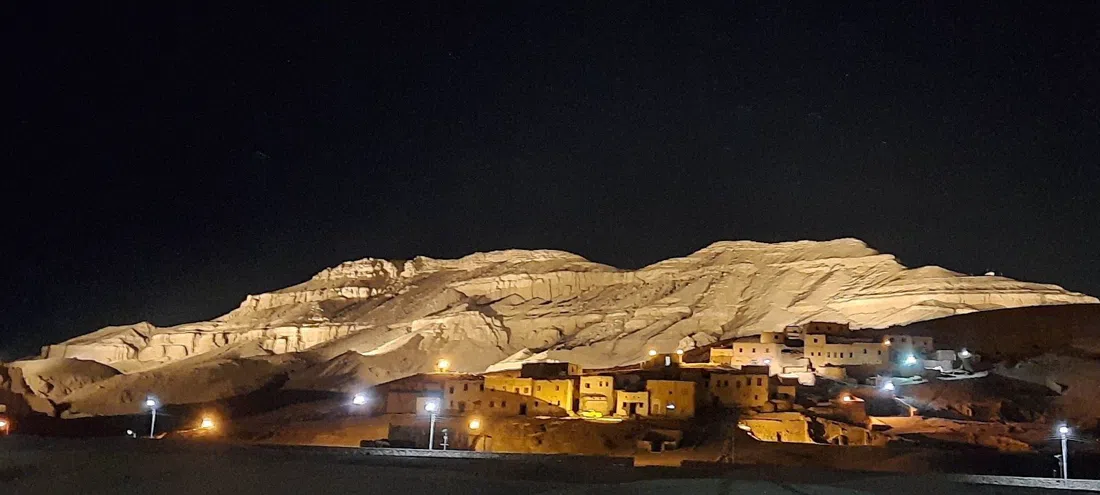
At the other end of the scale, Al Moudira Hotel (out beyond Medinet Habu) runs three kitchens, the Ottoman Hall, Khan Al Moudira and Il Forno, covering Mediterranean-Levantine cooking, wood-fired dishes and Egyptian classics, using the hotel's own farm produce. Non-residents can book lunch or dinner, but reservation is essential on [email protected] or +20 122 325 1307. This is the most expensive table on the west bank and it is not a drop-in stop for a group in dusty boots.
A rooftop, a river view and the ferry-side dinner
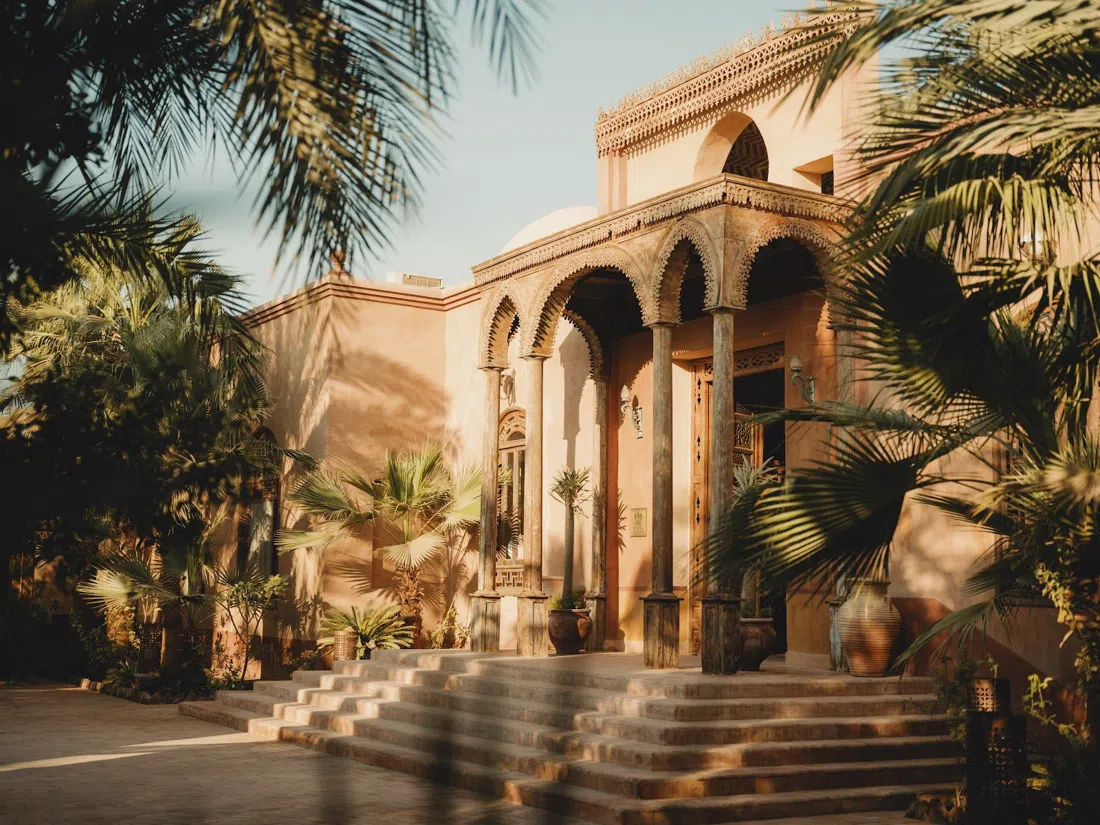
End the day nearer the water. Sunflower Restaurant West Bank (el-Gezira, minutes from the public ferry landing) is open 11:00-23:00 daily, serves alcohol, which is genuinely rare here, and stays open late, with a set menu around EGP 90-150 and drinks EGP 20-30. It is used to walk-in groups coming off the ferry; call +20 100 900 2234 for a big table.
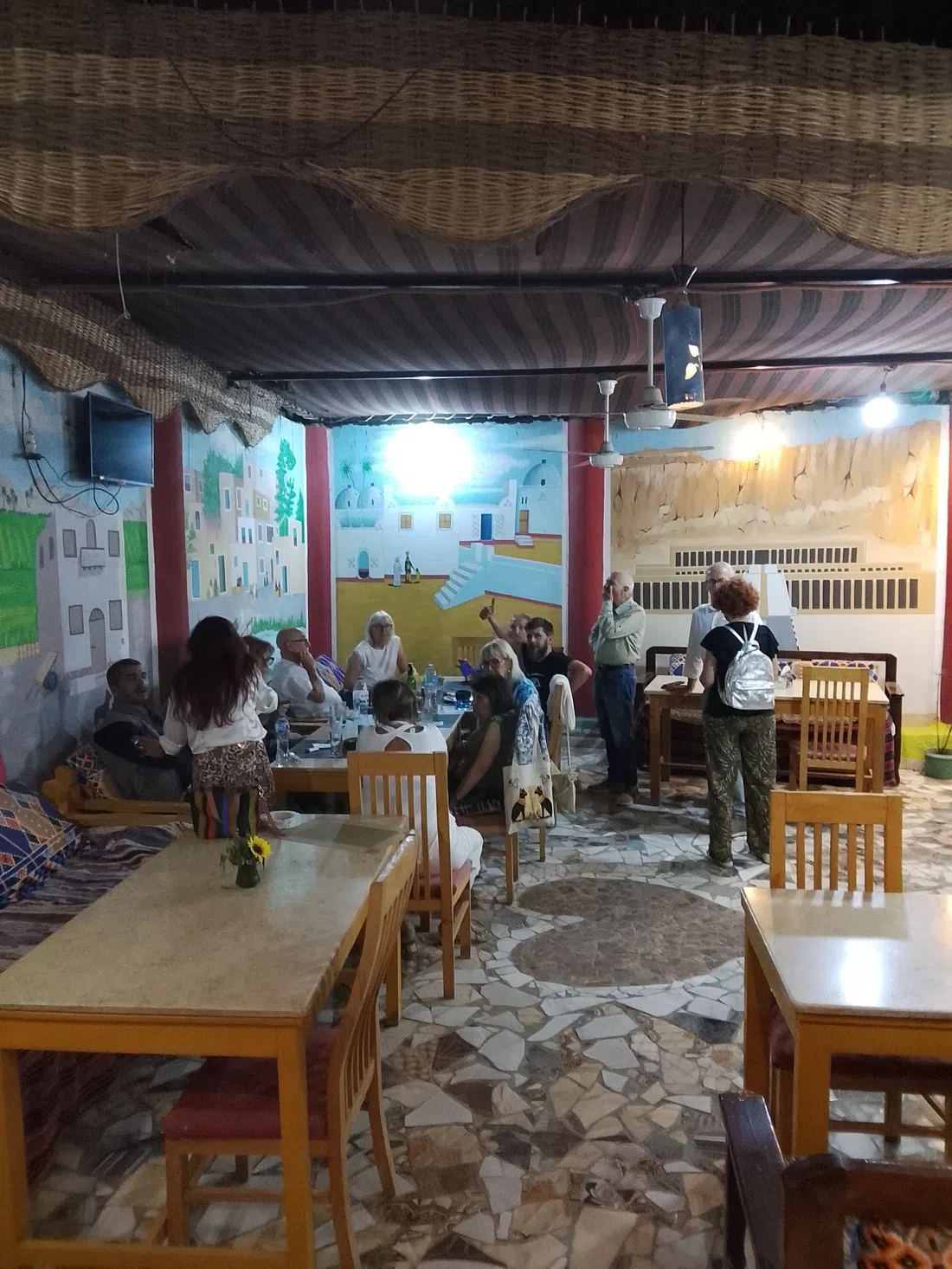
Tutankhamon Restaurant (el-Gezira, roughly 200m south of the ferry landing) has the best across-the-water view of the East Bank on this side of the river. The menu is fixed and seasonal at around EGP 90, drinks EGP 15-25, so choice is limited and the cooking is consistent; the format also means a group gets fed fast. Reserve in high season.
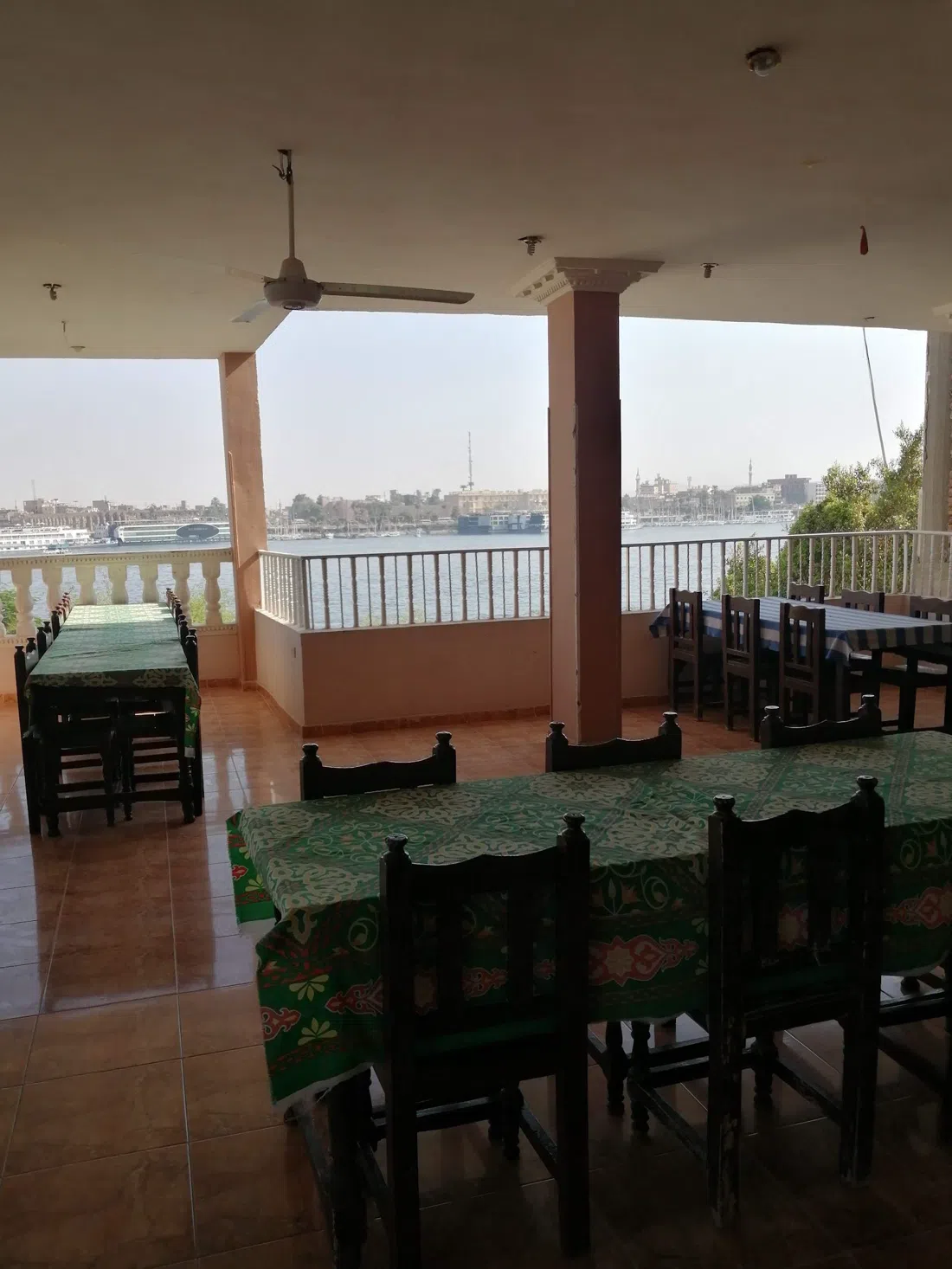
El Gezira Hotel rooftop restaurant (el-Gezira village) was renovated in 2025 and is still family-run, serving Egyptian and international dishes at village prices. It hosts folklore evenings that are put on for the guests staying there rather than staged for coaches, which is the difference worth paying attention to. Ring +20 952 310 034 or email [email protected] for a non-resident table.
What to put either side of the Colossi
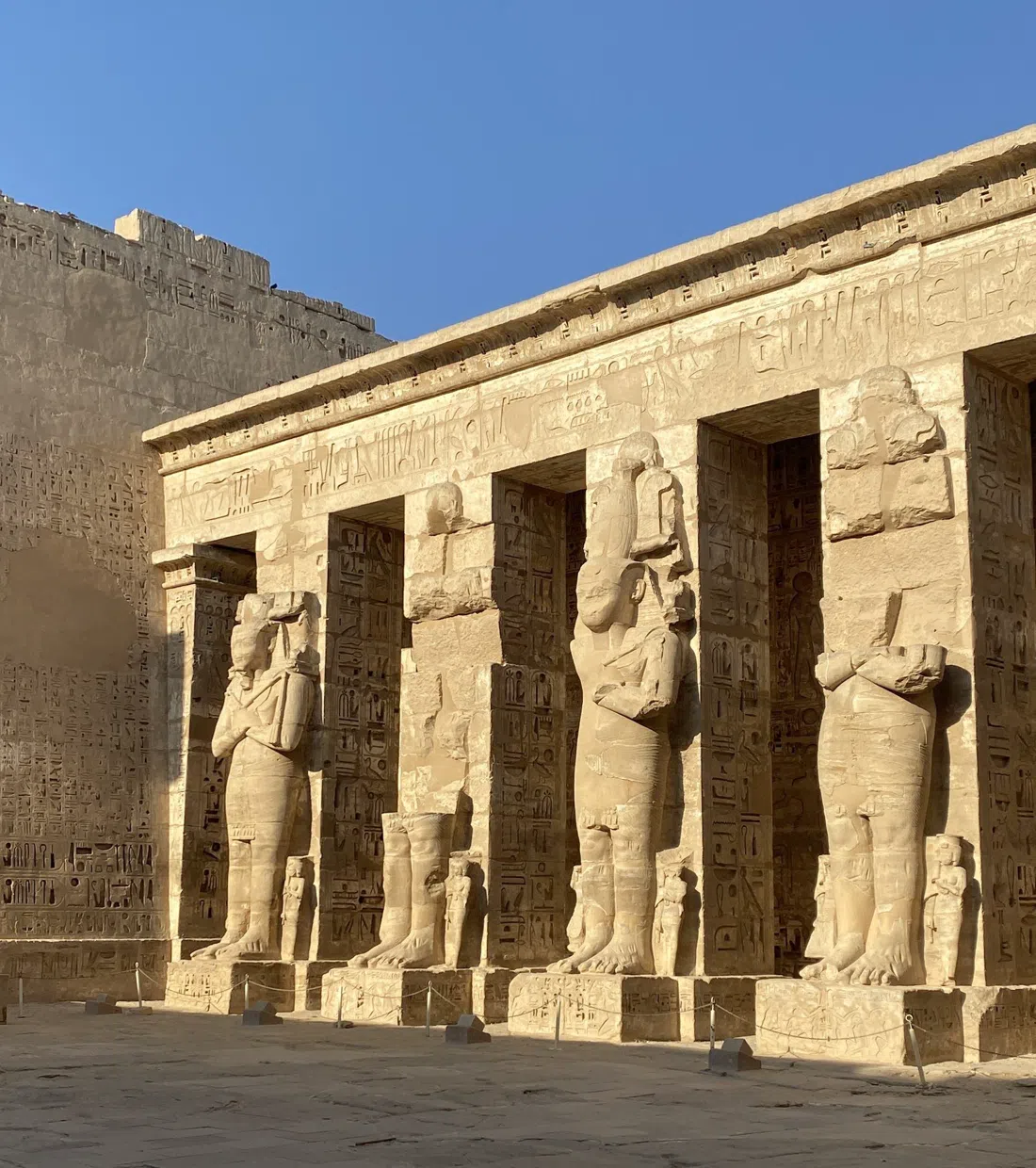
Medinet Habu (Mortuary Temple of Ramesses III) (southern west bank) is the obvious ticketed counterweight to the free statues: a few minutes' drive, open 06:00-17:00, EGP 220 adult and EGP 110 student, and the best-preserved painted temple on this bank. Colour survives on the ceilings and in the upper reaches of the columns. It takes coach groups without strain.
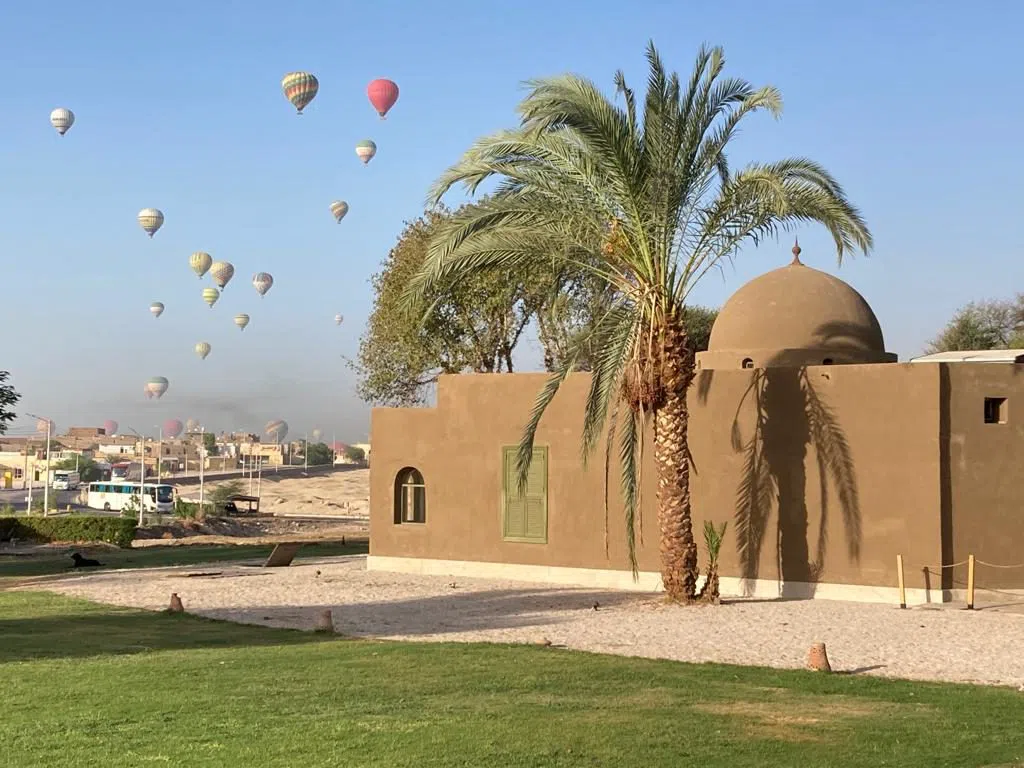
Howard Carter House (on the same west-bank road, near the Colossi) is the human-scale stop, the excavator's domed house, kept as a small museum, open from early morning until 17:00, EGP 220 adult and EGP 110 student. The rooms are cramped, so groups have to go through in waves; two or three people will enjoy it and twenty will not.
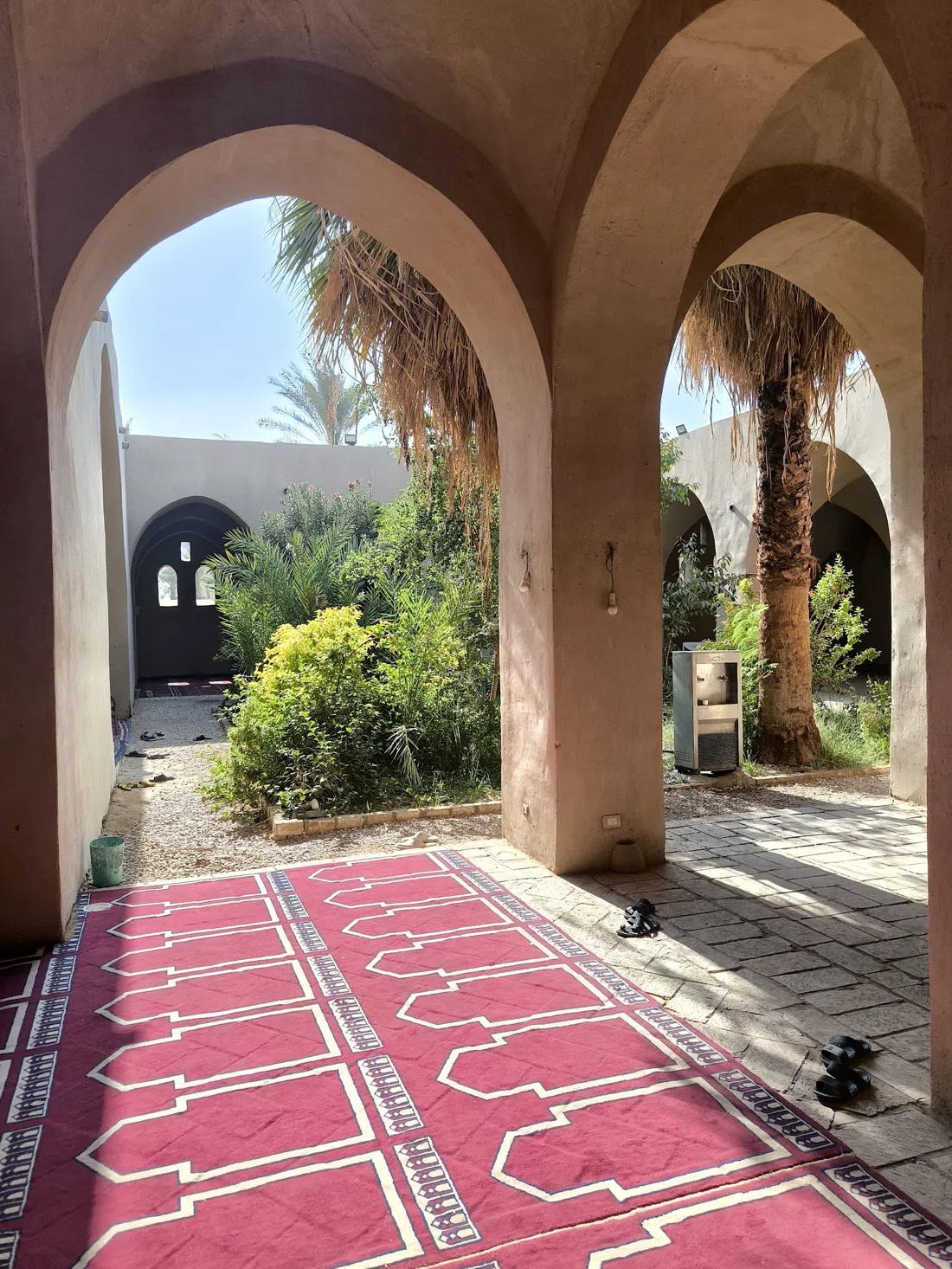
New Gourna Village (New Gourna, about fifteen minutes away) is the detour that gives the west bank a story after the pharaohs. Hassan Fathy's experimental mudbrick village, with its mosque, theatre and khan restored under a UNESCO-backed project completed in 2022. It is free to walk through, but guided visits run through the village's Centre for Sustainable Architecture and need arranging ahead, so do not arrive with a coach and expect access.
Is it worth it
Yes, with one condition: treat it as a stop with a temple attached rather than a photo opportunity. As two statues alone, ten minutes is honestly enough, and anyone who tells you the Colossi are the highlight of the west bank is selling something. With the re-assembled temple behind them open, and with breakfast opposite at six in the morning or a garden lunch ten minutes inland, it becomes a proper hour or two.
It suits early risers, people who like reading a ruin slowly, and anyone off a dawn balloon flight who needs somewhere to land. Families do well here, because there is nothing to break and no stairs. For budget travellers it beats almost any other monument in Luxor, because the headline sight costs nothing. It does not suit anyone who needs shade, a café on site or a lavatory, and it does not suit a large group at midday in summer.
The best time to go
Early. The statues face east, so the first light of the day lands flat on their fronts and the carving on the side panels reads properly; by mid-afternoon you are shooting into the sun and the stone goes flat and grey. The first coaches reach the lay-by shortly after the tomb sites open, so arriving before them buys you a genuinely quiet fifteen minutes, and the temperature difference between 07:00 and 11:00 in an open field with no shade is not a small thing.
Seasonally, October to April is the comfortable half of the year. From May to September the middle of the day on this bank is punishing and any outdoor sightseeing needs to be finished by late morning. Because the Colossi have no gate, they are never shut and never sold out. The demand pressure in Luxor is on guided transport and on the ticketed sites, not on the statues themselves.
One rhythm that works: balloon at dawn, breakfast at 06:30 or 07:00, the Colossi and the temple behind them by 08:00, one ticketed temple after that, and a long lunch inland before the afternoon heat. Late afternoon, come back down to the ferry side for a rooftop and a drink.
Getting there, paying and what a day costs
The public ferry crosses from the east bank to the el-Gezira landing constantly through the day for a few Egyptian pounds; from the landing, taxis and shared minibuses run out along the road past the Colossi. A hired car with a driver for the morning is the more practical option if you are combining the statues with the ticketed sites, because the distances between them are longer than a map suggests and there is little shade at any of them. Cycling is possible and pleasant in winter for anyone reasonably fit; in summer it is a bad idea.
Bring Egyptian pounds, in small notes. The ferry, the minibuses, the sellers at the lay-by and most of the smaller cafés are cash businesses; card acceptance is patchy and the more reliable ATMs are on the east bank. Ali Baba takes cards, and the hotel restaurants will, but do not plan a day around that.
Allow an hour for the Colossi plus the temple behind them, ninety minutes for Medinet Habu if you want to look properly, and thirty for Howard Carter House. Ticketed sites close at 17:00; the free statues do not close at all.
A self-driven day here can be genuinely cheap: nothing at the Colossi, EGP 100-220 for the temple, EGP 220 per ticketed site, and a EGP 90-150 set menu at the end of it. A guided full-day west-bank tour, which runs seven days a week, starts from 89 USD per person and covers the driving and the explanation. Mid-range is a garden lunch at roughly EGP 510-1,300 a head; the top end is a reserved table beyond Medinet Habu at Relais & Châteaux prices.
Staying on the west bank puts you ten minutes from the statues at sunrise and inside the village-restaurant scene described above; staying across the water puts you nearer the nightlife and the ferry. Compare both on our Luxor hotel search, and for how the two banks fit together across a longer trip, start with the Luxor guide.