
On Luxor's West Bank, where the Theban hills bake gold in the harsh afternoon light, the same rasp of chisel against stone that once shaped canopic jars and cosmetic vessels for New Kingdom tombs still rings out from a string of family workshops strung along the road that runs from the Colossi of Memnon toward the Valley of the Kings. Walk into any of them and you'll find dust-caked men bent over hand-turned lathes, coaxing translucent bowls and vases out of blocks quarried from hills their grandfathers worked too. It's a living trade, not a re-enactment for tourists — and knowing which workshops treat that history honestly, and which exist mainly to move resin off a shelf, makes the difference between carrying home a genuine piece of Egyptian stone and a moulded souvenir.
Alabaster's 3,000-Year Job Description
What Egyptians call alabaster and sell as such is technically calcite-travertine, not the gypsum alabaster used in Europe — a banded, semi-translucent stone quarried from the limestone plateau west of the Nile since before the pyramids. The pharaohs used it for canopic jars, cosmetic pots, offering tables and the odd royal sarcophagus, precisely because light passes through a thin-carved wall of it, giving even a plain jar a faint interior glow. That's not folklore dressed up for tour groups; it's the reason the material was chosen in the first place, and it's still the easiest way to separate the genuine article from a fake — hold it to a torch or the sun and real alabaster answers back.
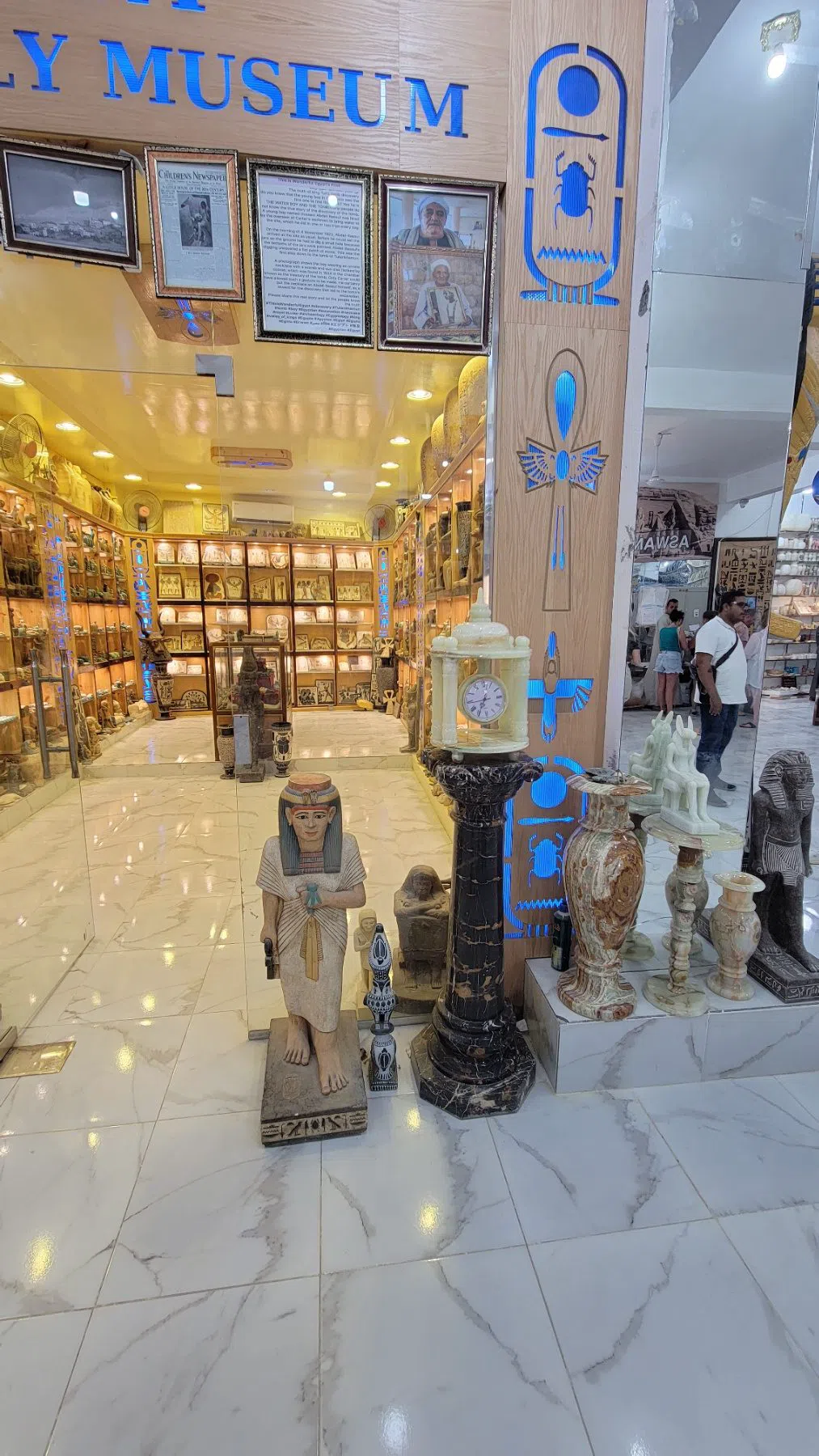
Hassany for Alabaster, on the main workshop strip toward the Valley of the Kings, leans into that history directly: alongside the usual carving floor there's an in-house museum room walking through 3,000 years of the craft before you reach the sales area. Entry and parking are free, and the layout is built for coach groups — expect a demonstration first, a walkthrough second, and a sales pitch no harder than anywhere else on the strip.
Real Alabaster vs. Resin: What You're Actually Buying
The West Bank alabaster trade has a resin problem, and it's worth understanding before you hand over a single Egyptian pound. Cast resin pieces are lighter than stone, warm to the touch almost immediately, show no natural veining (or show printed veining that repeats), and make a dull knock rather than a stone's clean ring when tapped. Genuine alabaster is cool even in Luxor's heat, has weight for its size, and every banding pattern is unique because it's mineral deposit, not mould. A torch held behind a thin-walled piece is the single best test — light diffuses unevenly through real stone and either doesn't pass through resin at all or passes through it too evenly.
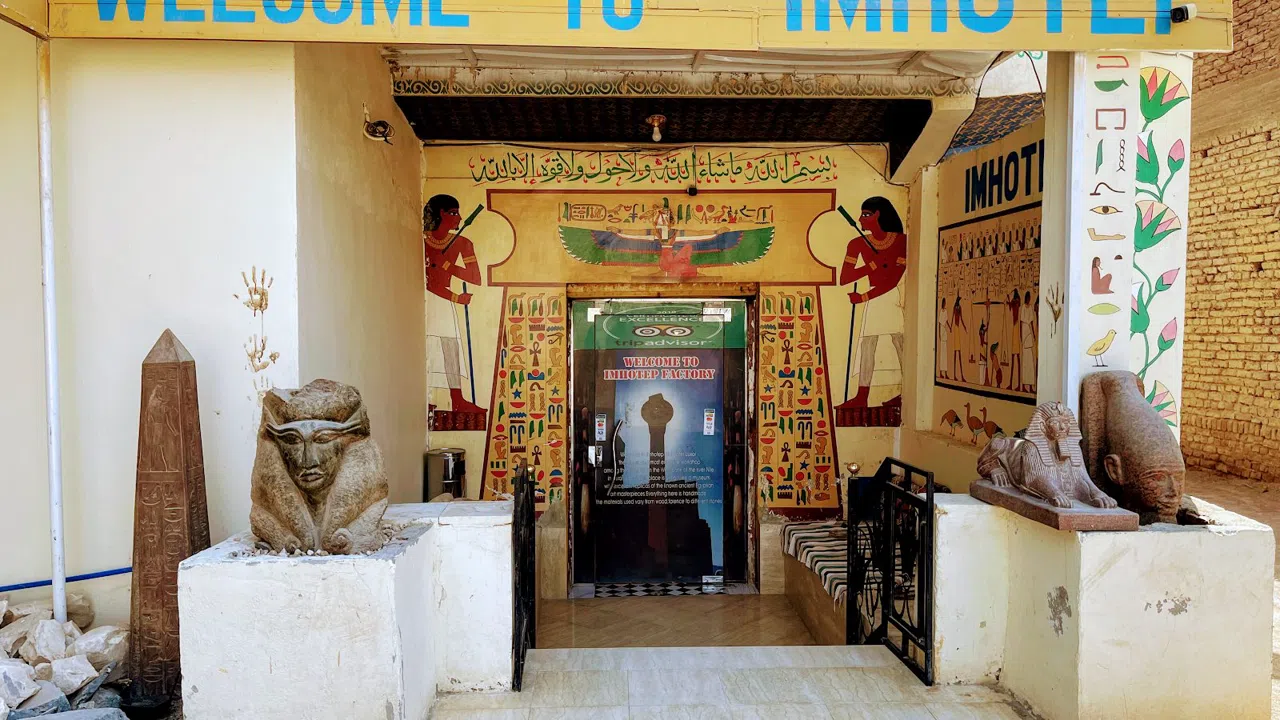
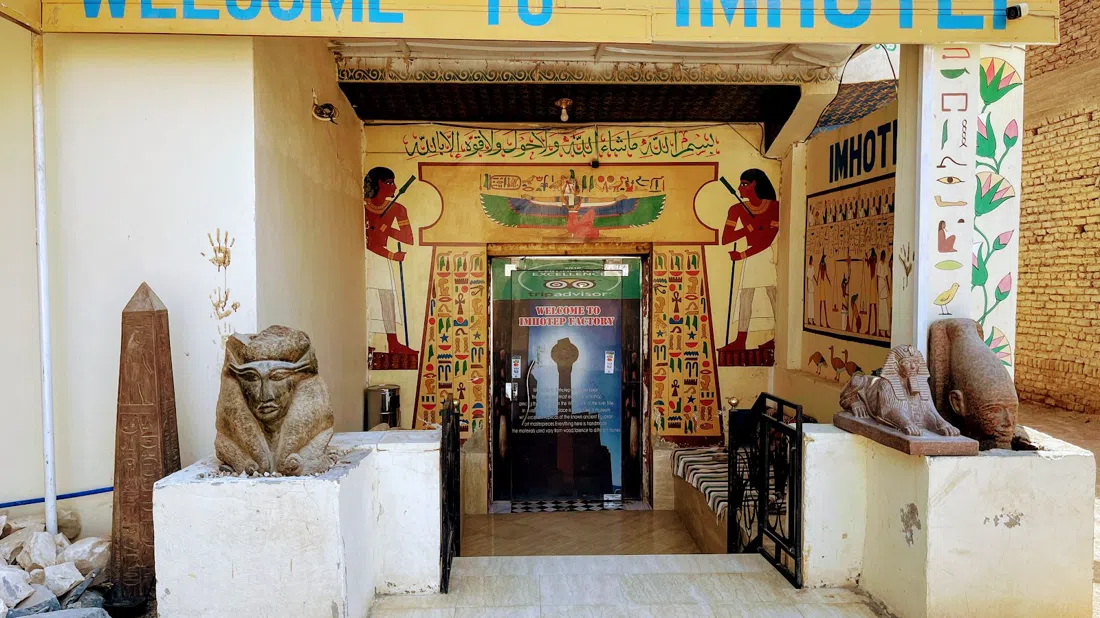
Imhotep Alabaster Luxor, on the West Bank, has built its reputation on teaching visitors exactly that distinction rather than working around it. It's the highest-rated workshop on the West Bank by a clear margin — 4.8 stars across more than 450 reviews — and reviewers consistently mention owners who'll walk you through the torch test and the tap test unprompted, before you've asked, rather than leaning on a hard sell. Pickup and drop-off are free across both the east and west banks, which also makes it work well as a standalone visit rather than one stop among six on a group itinerary — a good choice if you want to actually absorb the explanation instead of being moved along.
The Family-Run Ateliers
A handful of the West Bank workshops are still small enough that the person demonstrating the lathe is also the person who'll ring up your purchase, and the pace reflects it.
Abo Elkomsan For Alabaster, on the West Bank, runs closer to a household visit than a retail stop — free entry, free parking, and mint tea or coffee offered to groups as a matter of course rather than a sales gambit. Reviews through 2025 and into 2026 are consistently strong on genuine hospitality, and the carving demonstration reads as honest rather than staged for cameras. It's a good fit for couples or small independent groups who want the unhurried version of the West Bank workshop experience, and a reasonable throughline if the "family-run atelier" angle is what drew you to visit one at all rather than simply buying a jar at the airport.
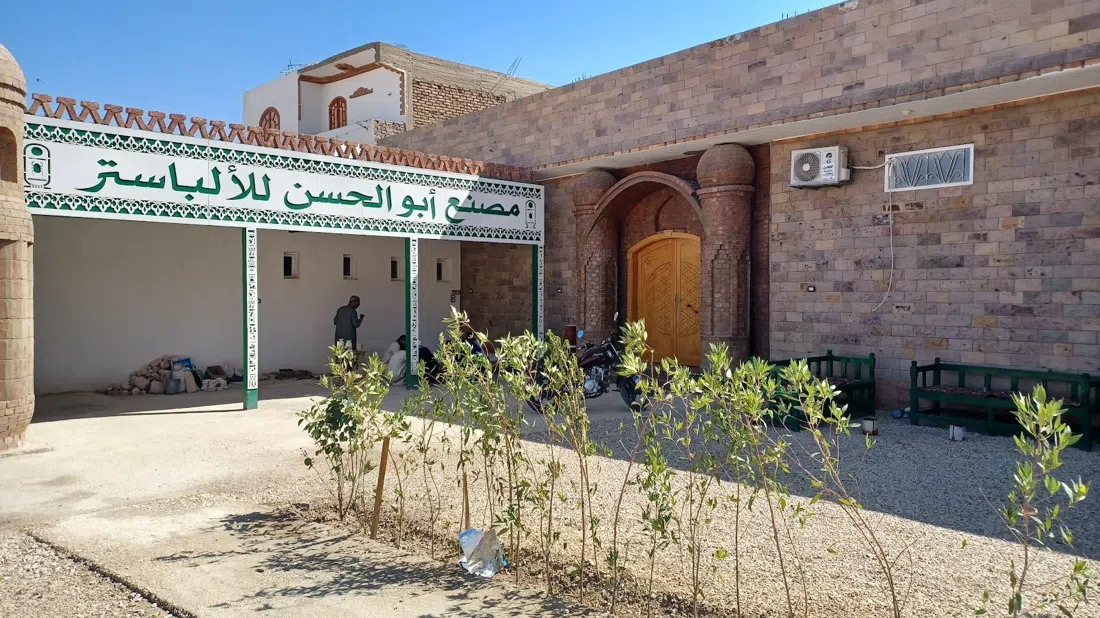
Hassany, covered above for its museum room, belongs in this bracket too — it's coach-ready in its layout, but the operation itself is still a family business rather than a chain, and the free parking and entry keep the door open to independent visitors who arrive by taxi rather than minibus.
Standard Stops on the Coach-Tour Circuit
The rest of the West Bank strip is built explicitly around group tourism, and there's no point pretending otherwise — these are the workshops your driver already knows, because they're the ones written into the itinerary.
Luxfour Alabaster Factory, on the West Bank, is about as standard as it gets: it's a fixture on private West Bank tour itineraries sold through Viator, Pelago and Trip.com in 2026, which means the logistics are already solved if you've booked a tour through any of those platforms. It suits travellers who want the demonstration and the shopping stop without arranging anything themselves.
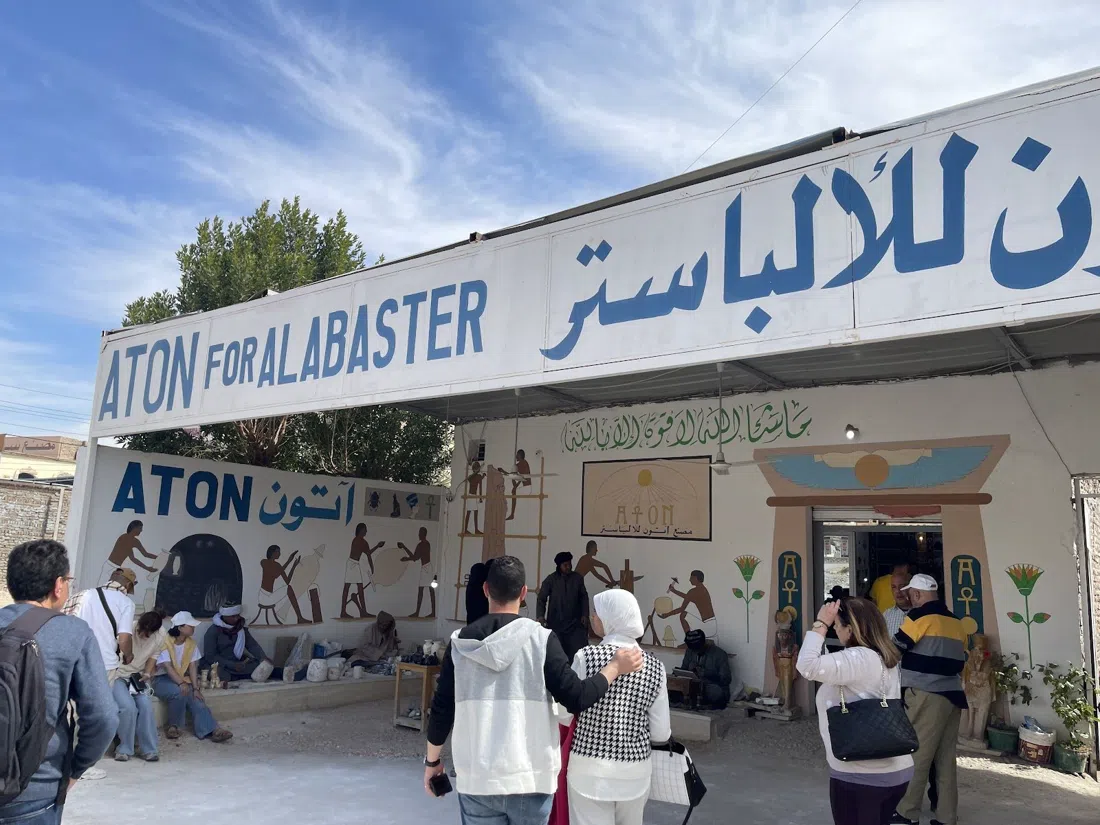
Titi For Art and Alabaster, on the West Bank, keeps regular daily hours, 8am to 5pm, and has good street-level visibility of the carving process — useful if you want to watch the lathe work happen before you've committed to going inside. It's geared toward drop-in tour groups rather than scheduled bookings, so it works for independent travellers driving the West Bank loop under their own steam too. Be ready to haggle here; it's the expected mode of doing business, not a red flag.
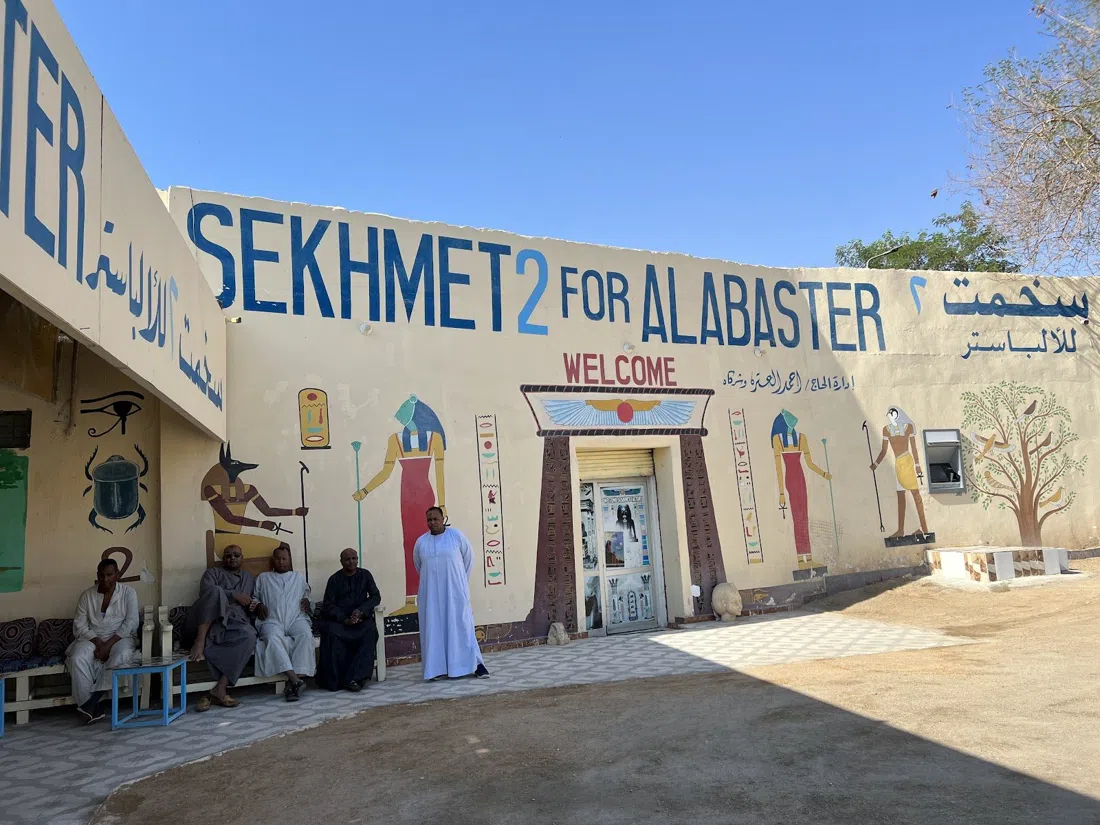
Sekhmet for Alabaster, on the road between Hatshepsut Temple and the Valley of the Kings, run by Ahmed Sekhmet, sits squarely on tour-bus footfall and is widely regarded by visitors as having the best-stocked display on the entire West Bank market strip. If you want to see the full range of what Luxor alabaster is carved into — vessels, statuary, chess sets, lamps — before deciding what you actually want, this is the workshop to browse rather than commit to first.
New Selket For Alabaster, on the main valley road, delivers a genuine carving demonstration and a real-versus-fake explainer that lines up with everything above, which makes it a legitimate stop on paper. Reviews are more mixed here specifically on pricing pressure once you've picked something out, so the honest advice is to agree a price before the piece is wrapped, not after — treat the initial figure as an opening position rather than a final one, and don't be talked into wrapping before you've settled the number.
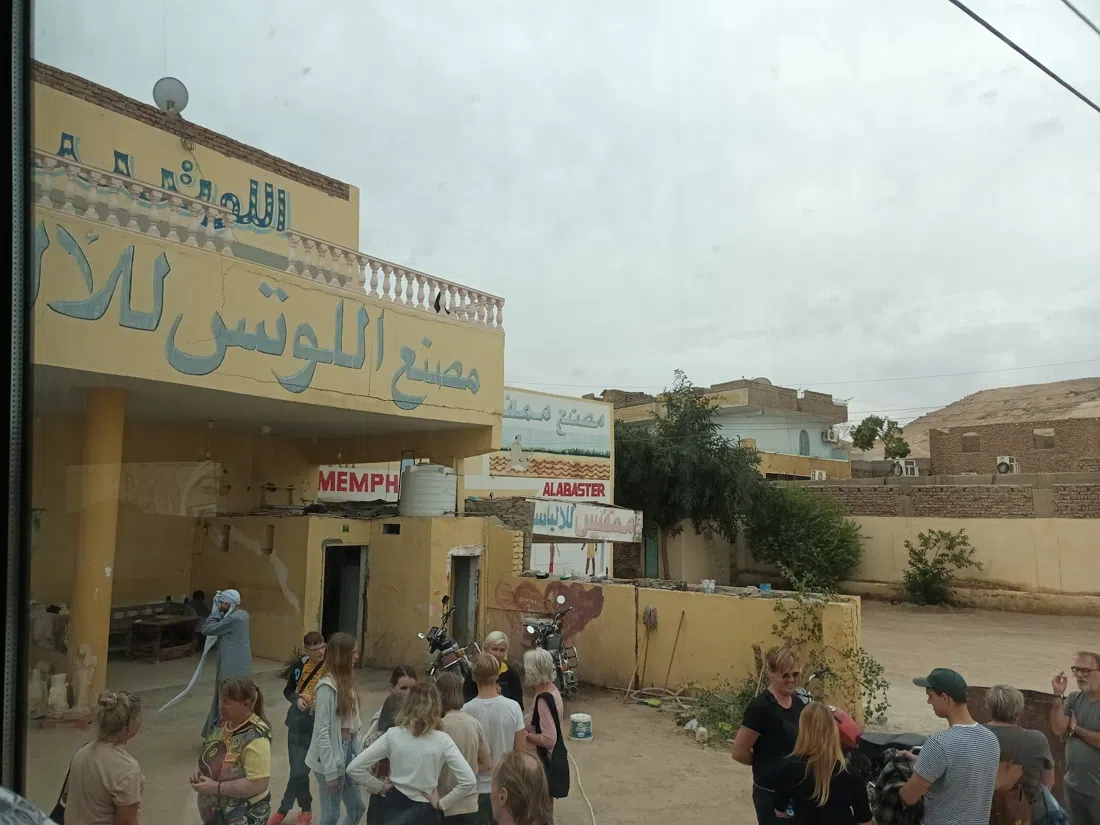
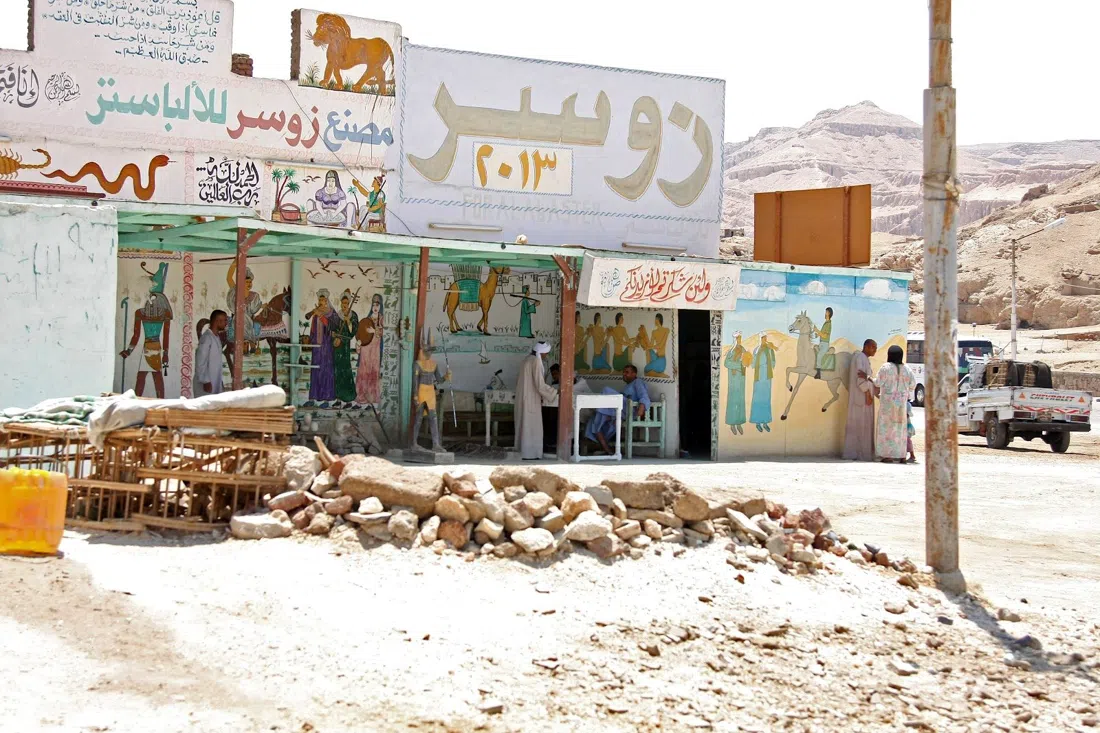
Abu Simble For Alabaster, a solid, standard coach-tour stop on the West Bank, is best suited to larger purchases — stone vases and bigger decorative pieces are where it earns its reputation. Reviewers are consistent on one point worth repeating: skip the small plaster or resin figurines sold alongside the stone pieces here and buy those, if you want them at all, somewhere else.
Groups vs. Couples: Choosing the Right Stop
The honest answer to "which workshop should I visit" depends less on the alabaster and more on how you're travelling. If you've booked a West Bank tour through a mainstream operator, you'll likely already be routed to Luxfour, Titi or Sekhmet — all three are built for coach logistics, and there's little upside in fighting the itinerary to visit somewhere else instead. Drivers on informal or negotiated tours often have a workshop they favour, sometimes for a commission arrangement that's an open secret in Luxor rather than a scandal; it doesn't make the stone fake, but it's worth knowing the recommendation isn't neutral.
If you're travelling independently — by taxi, hired car with driver, or as a couple wanting the slower version of the visit — Imhotep Alabaster Luxor and Abo Elkomsan For Alabaster are the two names worth going out of your way for. Both are set up to actually teach the craft rather than just sell it, and both work as a single, unhurried stop rather than one of five on a checklist. Hassany's museum room is worth the detour too if the 3,000-year framing matters to you as much as the shopping does.
Wherever you end up, the same rule applies across every workshop on this list: nobody in Luxor is offended by "no, thank you," and a workshop that pressures you after a clear decline is telling you something about the piece it's trying to move, not about the etiquette of the visit.
Getting There, Timing, Cash, and Budget
Transport. The workshops line the road connecting the Colossi of Memnon, Medinet Habu and Hatshepsut Temple to the Valley of the Kings, so the sensible approach is to fold a workshop stop into a West Bank sightseeing run rather than a dedicated trip. A taxi or hired car with driver from the East Bank crosses the Nile bridge south of town; the older route via local ferry to the West Bank landing plus a taxi on the other side is slower but cheaper, and still common for independent travellers. Most drivers know the workshops by name and will happily stop at whichever one you specify — say the name, not just "an alabaster shop," if you have a preference from this list.
Timing. Go early. The West Bank has no shade and little breeze, and by late morning in most of the year it's already uncomfortable to stand outside watching a demonstration. Titi keeps to 8am–5pm; the rest broadly follow coach-tour hours, meaning mid-morning through mid-afternoon, so aim to arrive before 11am if you want a workshop to yourself rather than sharing the floor with two minibuses.
Cash. Egyptian pounds are strongly preferred and will get you a better price than paying in US dollars or euros, both of which are usually accepted but at a poor informal exchange rate. Card readers exist at some of the larger workshops but are unreliable enough that you shouldn't count on one working, especially once you're mid-negotiation. Carry small denominations; workshops rarely have change for a large note, and that alone can end up setting your final price.
Budget. Prices span the full range across this list, from budget-friendly ($) to genuinely premium ($$$) depending on the piece and the workshop — small vessels and carved trinkets sit at the low end, large vases and statuary at the top. Haggling is the norm rather than the exception at every one of these workshops; treat the first quoted price as an opening move and settle before anything is wrapped for travel, particularly at the stops flagged above for pricing pressure. If you're staying on the East Bank and want a base close to the ferry crossing and the workshop road, start with Luxor hotel search; for the rest of what the West Bank and East Bank have to offer beyond the workshops, the Luxor guide covers the wider city.