The Luxor issue
Three Days in Luxor at a Pace You Can Keep
A realistic three-day plan for Luxor built around the two usable hours of light at each end of the day, with the middle of the afternoon written off on purpose.

By Hanne VermeerReading Luxor the way it was built
By nine in the morning the light in Luxor stops being flattering and becomes a logistical problem. The city packs a royal necropolis, two enormous temple complexes and a painted workers' village into a few kilometres of riverbank, which is precisely why so many people arrive with six sites on a day's list and leave having properly looked at none of them. Three days is enough time here, but only if the plan is built around the hours the sun allows rather than the number of tombs a ticket technically permits.
The heat writes the timetable
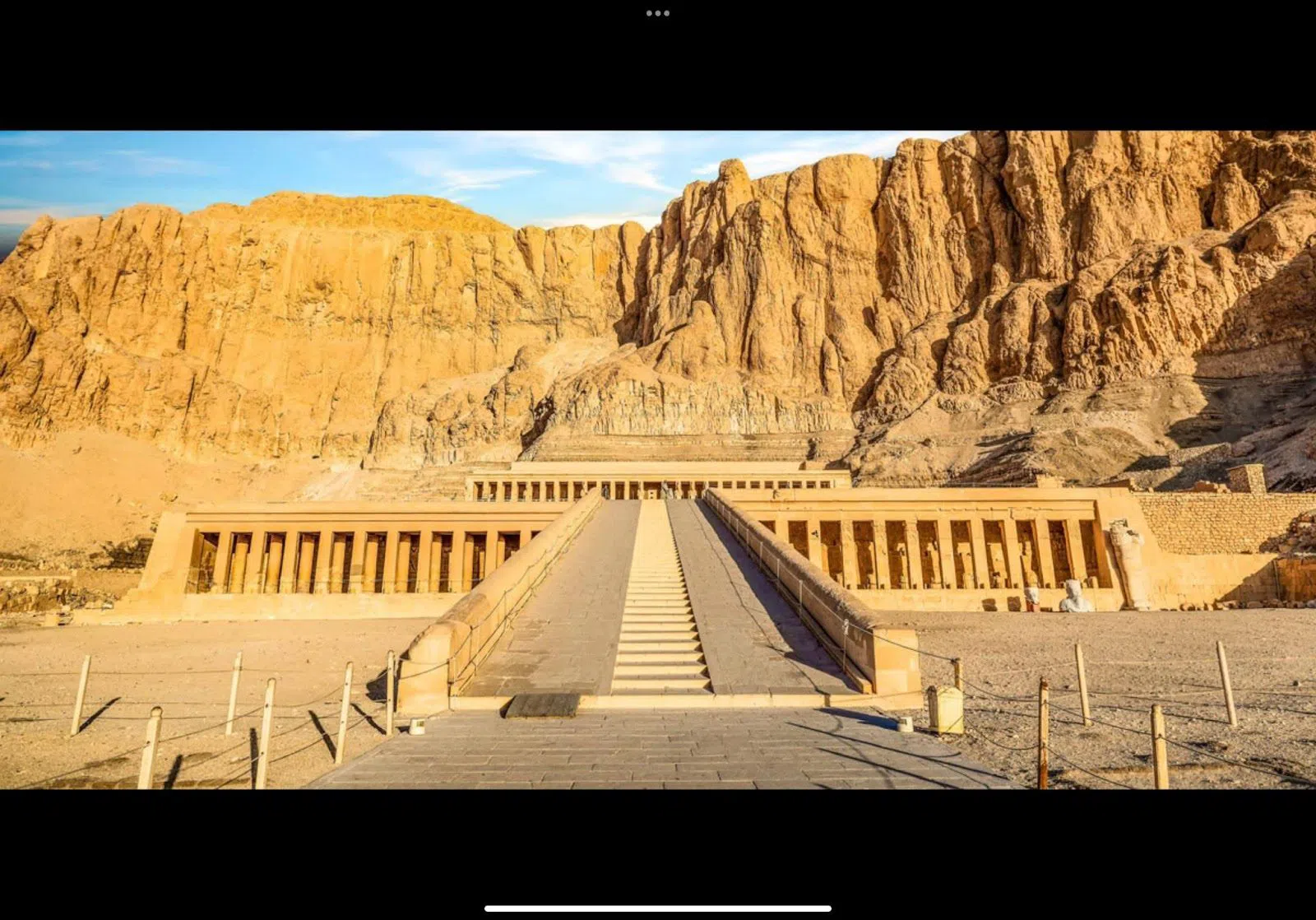
Work backwards from two usable windows: roughly 06:00 to 10:00, and 17:00 to 21:00. Everything in between is for shade, air conditioning, water and the river. The sites themselves enforce this. Tomb interiors in the necropolis are unventilated, so heat and bodies accumulate through the morning and the last chamber of a six-tomb day is a queue in a hot corridor. The cliff behind the Temple of Hatshepsut throws the sun straight back onto the terraces. The Avenue of Sphinxes has no shade at all, anywhere along it.
The second consequence is subtler. Coach parties run to a coach timetable, and that timetable is not dawn. Arriving at a major site at opening rather than at 08:30 buys you a different place, not just a cooler one. An hour of Karnak before the first parties is worth more than three hours of it afterwards.
So: two big things a day, never three. One in the early window, one in the evening window, and a deliberate hole in the middle that you plan as carefully as the sites. Day three only survives if day one did not try to be the whole trip.
Plan your Luxor trip
Live prices from our booking partners.
Free cancellation on many rooms. We may earn a commission when you book.
Pick a bank and stop crossing the river
The most common way to lose an hour in Luxor is to spend it in transit. The monuments split across the river: temples on the East Bank, tombs and mortuary temples on the West. An itinerary that bounces between them twice a day burns the energy you were meant to spend looking at things.
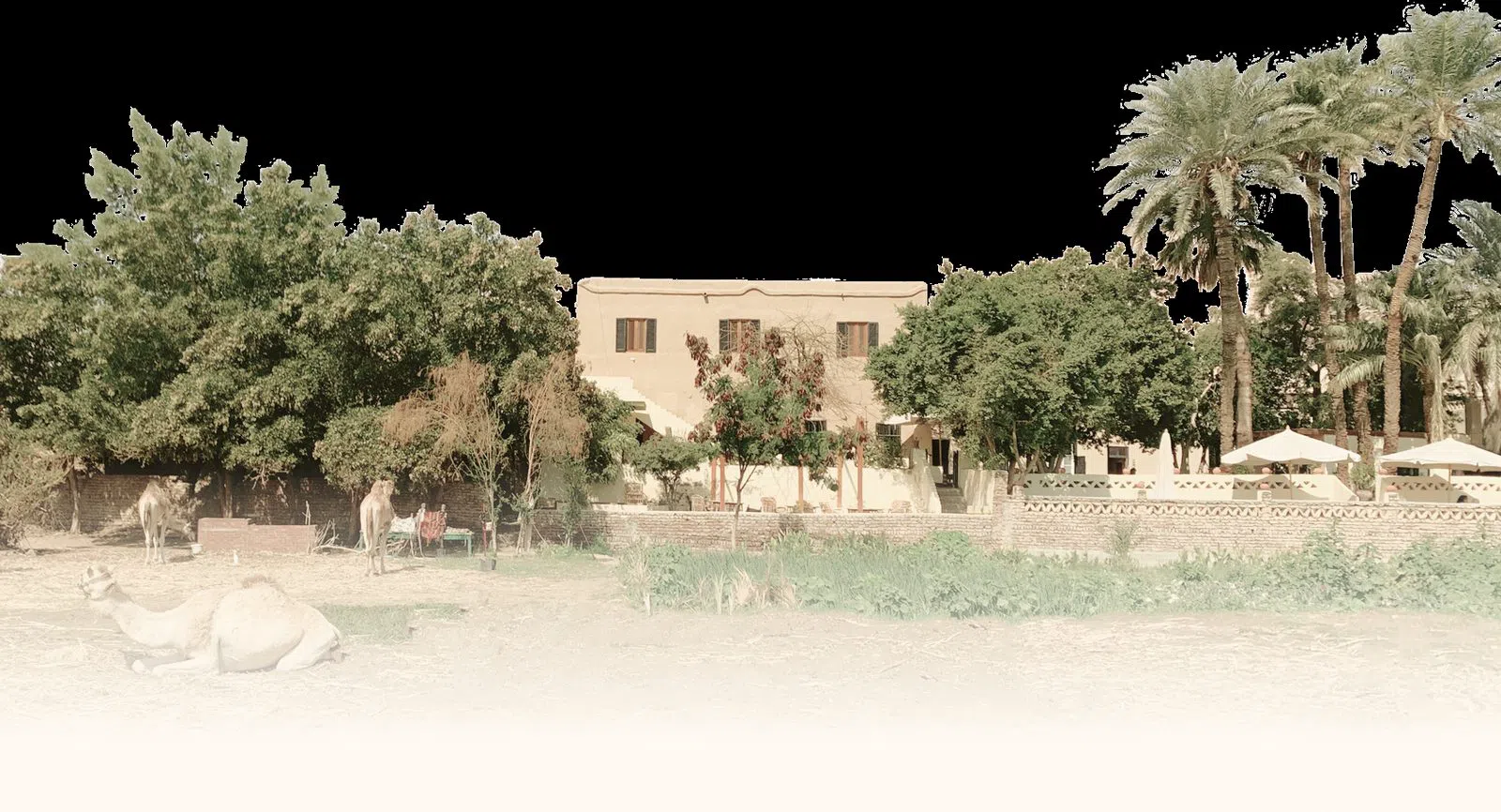
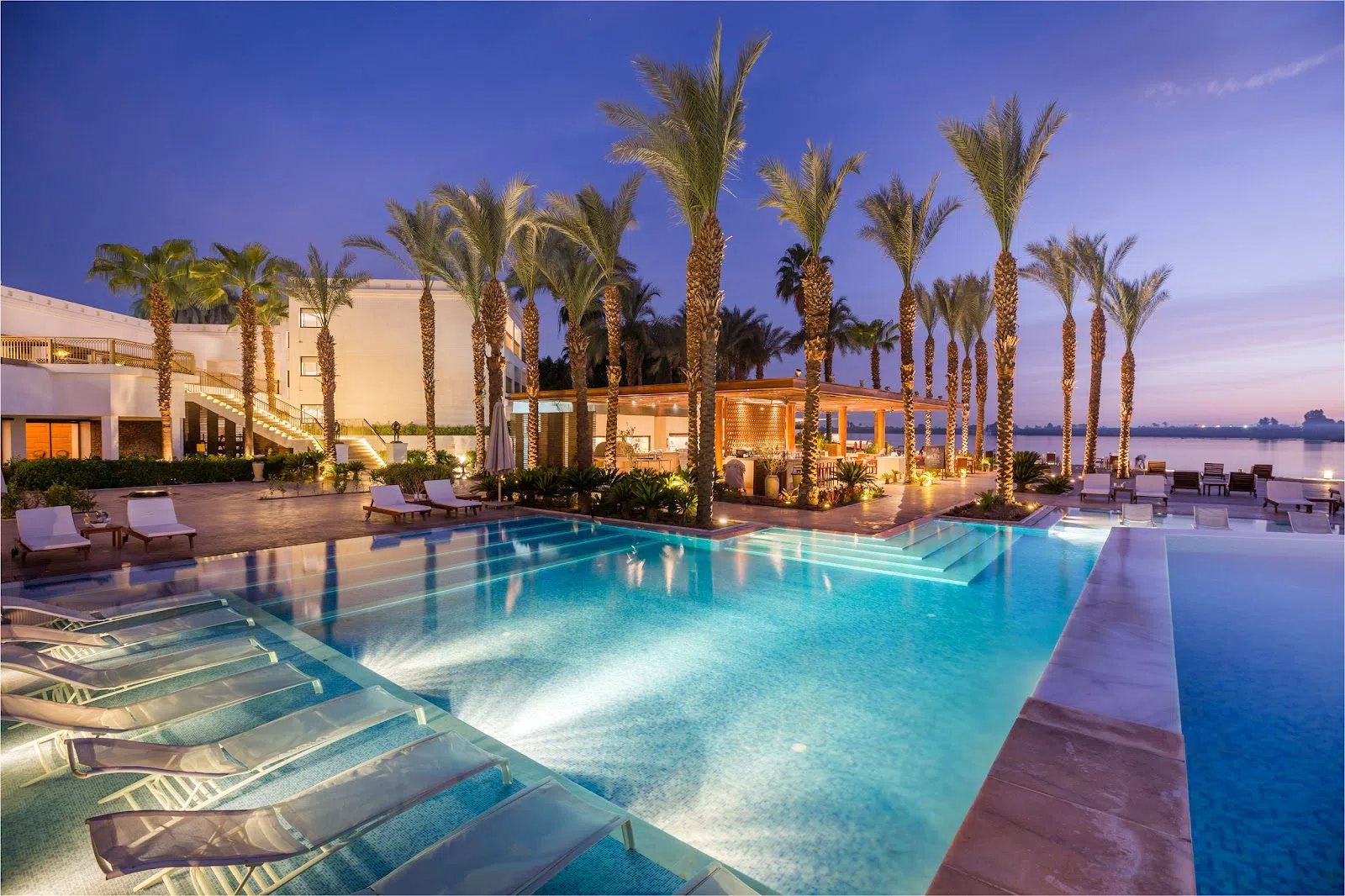
Marsam Hotel (West Bank, among the fields near the mortuary temples) is the oldest guesthouse on that side and the former University of Chicago excavation house, with 29 rooms and 5 suites at €35 to €160 per room per night including breakfast. Its garden restaurant is open to non-residents. Staying here removes two river transfers a day, which is the cheapest available fix for an over-stuffed plan. It takes small groups and archaeological teams comfortably.
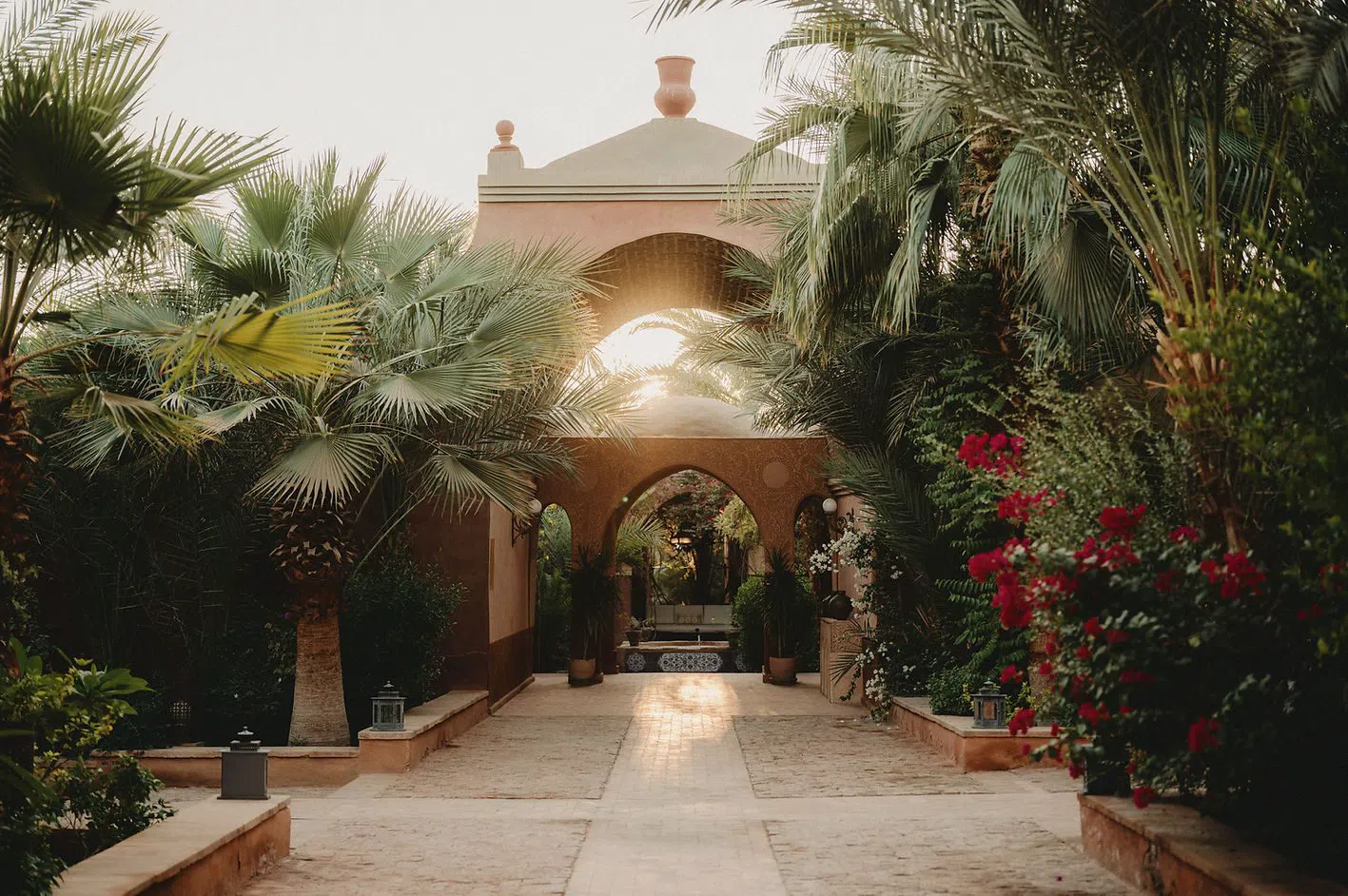
Al Moudira Hotel (West Bank, out in the farmland rather than beside the sites) is the recovery base if the budget stretches: 54 suites, an active Relais & Châteaux member, from around $455 to about $986 per suite per night including taxes. It hosts groups and private events, but it is a quiet property and a large, loud party is not the fit. Factor a 15 to 20 minute drive to the temples; the isolation is what you are paying for.
Hilton Luxor Resort & Spa (East Bank) is the other approach: resort scale, three restaurants, five bars, twelve treatment rooms, and pools open 09:00 to 22:00. Rooms typically run $120 to $250. Day-use rooms are bookable, which is the practical way to write a real half-day off into a three-day plan without leaving the city. Pool and gym access is charged separately from a day-use room, so confirm exactly what is included when you reserve rather than at the poolside. More options across both banks are in the Luxor hotel search.
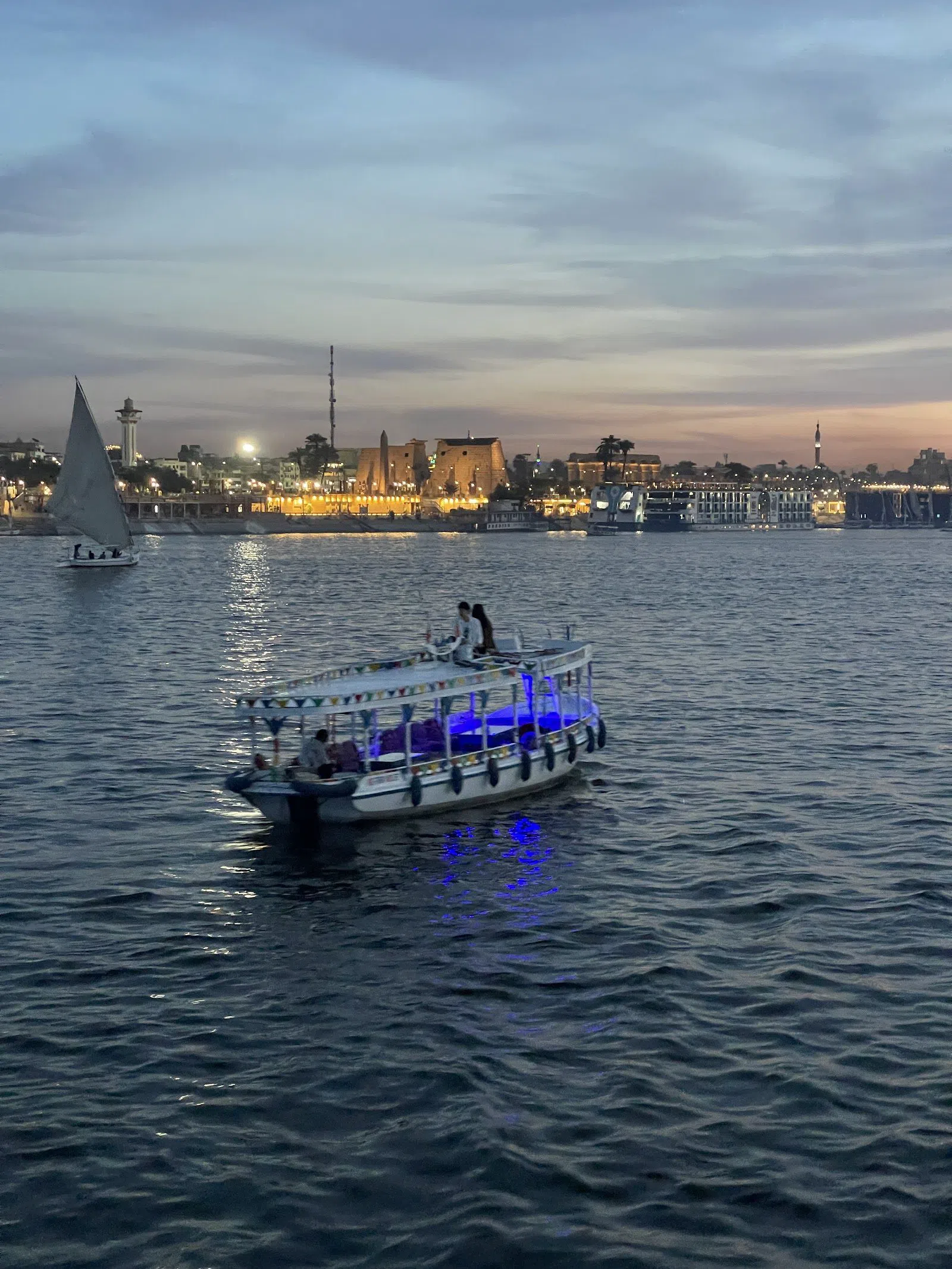
Whichever bank you choose, the crossing itself should be the Luxor Public Ferry (East Bank landing directly in front of the Luxor Museum). It runs roughly every half hour from morning to evening, needs no booking, has no capacity limit for practical purposes and costs EGP 25 one-way at the tourist fare. It removes the long road detour over the bridge, the single most tiring and least interesting part of a Luxor day. Taxi drivers will tell you the ferry is not running, is not for visitors, or is about to stop. A private motorboat is EGP 100 to 200 one-way if you want to go on your own schedule.
Day one on the East Bank
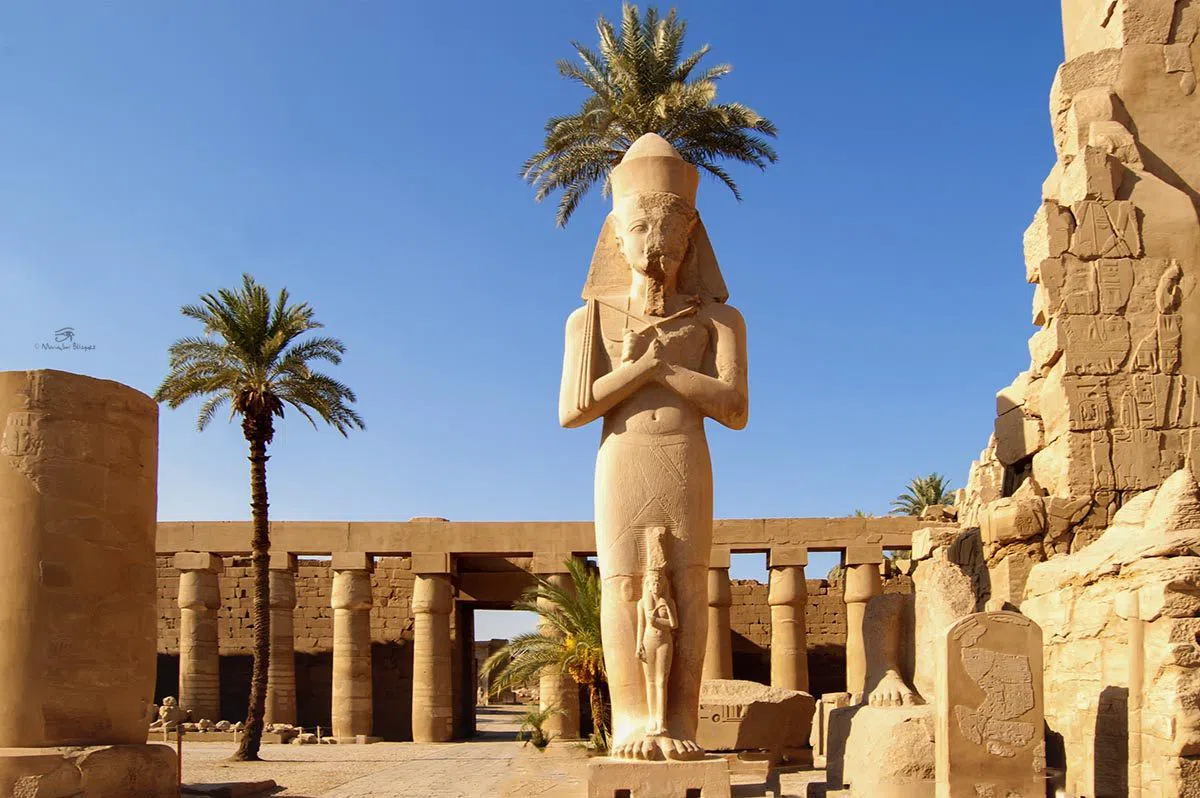
Be at Karnak Temple Complex (East Bank, at the northern end of town) for 06:00 opening. This is the single biggest energy sink in Luxor and the site most often ruined by scheduling. Budget two to three hours and give it your freshest legs, not the exhausted remainder of a tomb morning. Entry is EGP 600 for a foreign adult. Coach parties start arriving from about 08:00 and again mid-morning, so the hypostyle hall you get at 06:30 and the one you get at 09:30 are different experiences of the same stones. There is no door policy and groups of any size are admitted; if you hire a private guide, they must be licensed.
Then stop. Eat, sleep, swim, sit still. Treat the afternoon as a scheduled part of the plan rather than dead time.
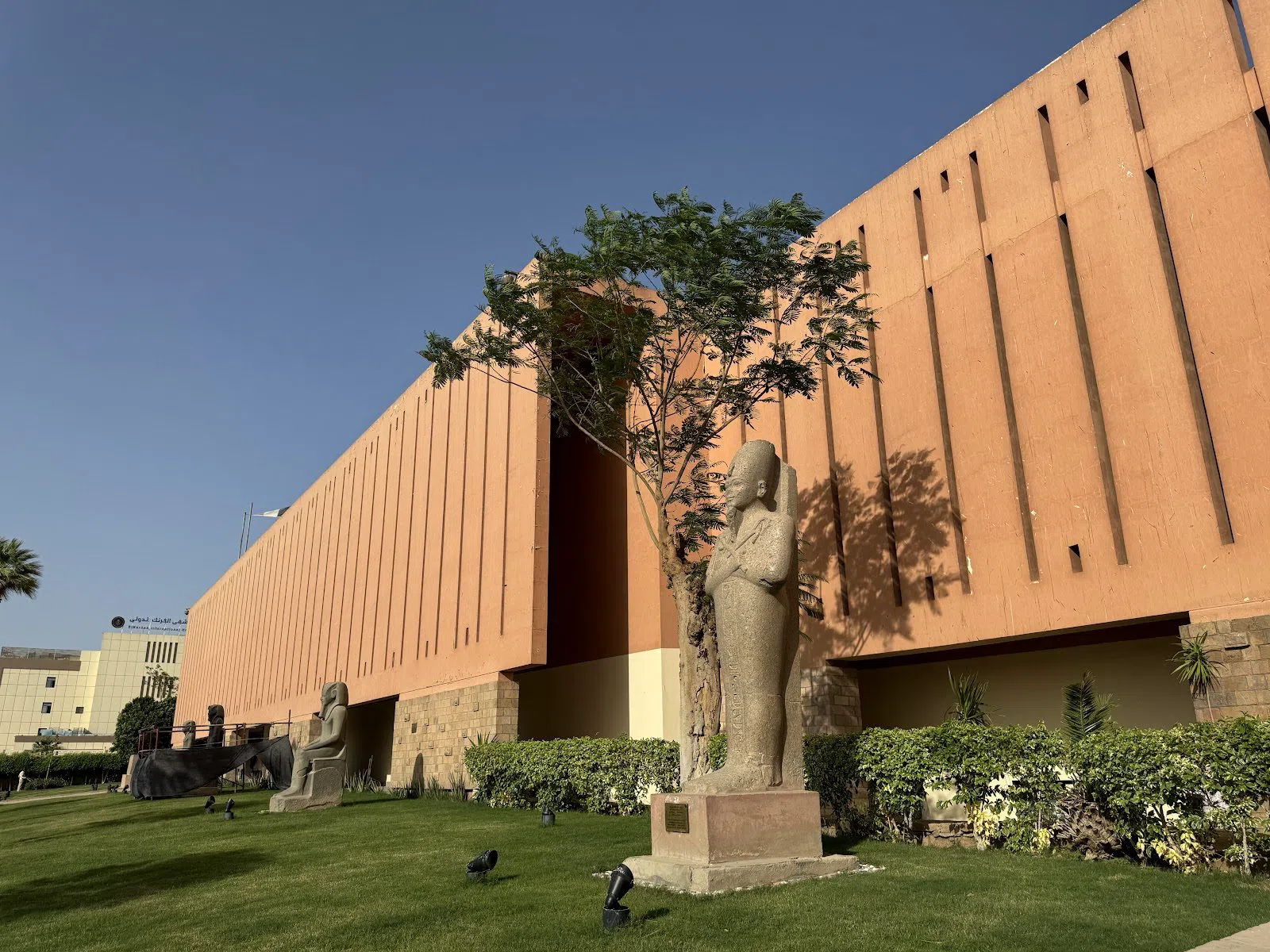
Restart at 17:00 at the Luxor Museum (East Bank, on the Corniche), which is air-conditioned, walkable in an hour and open again from 17:00 to 21:00. Entry is EGP 400. It is the best recovery slot in the city for an evening when nobody has the legs for another temple, and the collection rewards an hour far more than a forced march would. It is small enough that large parties are asked to split, so a group of a dozen should expect to go in waves.
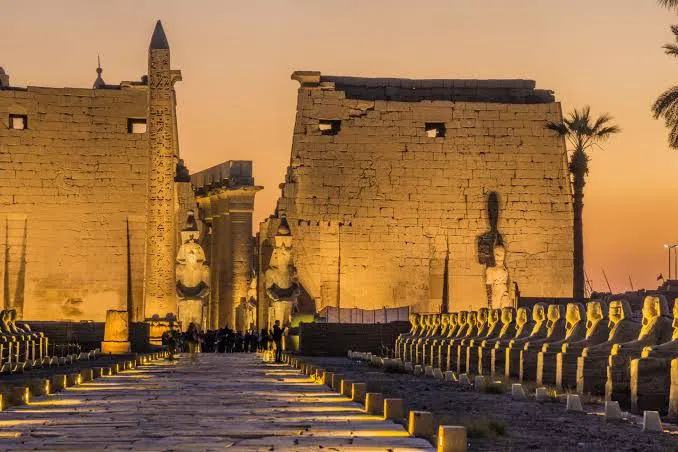
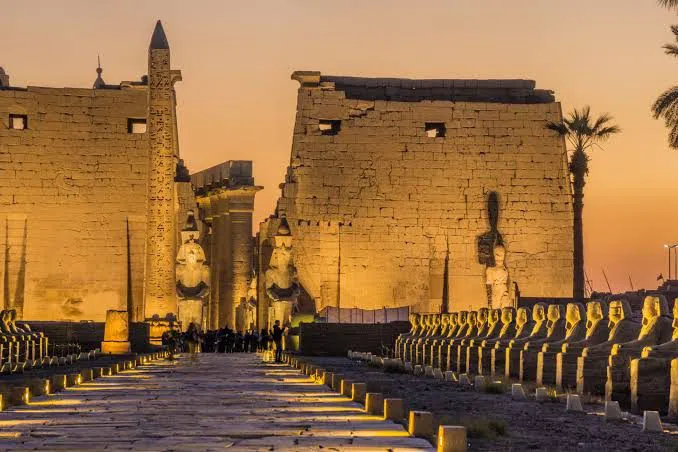
At dusk, walk the Avenue of Sphinxes (East Bank, running between the two temples). It is free, open-air, unticketed, and it reopened in 2021 after decades of excavation. Walking the link between Karnak and Luxor Temple replaces a taxi transfer with the nicest twenty minutes of the day, but only at dusk. In mid-afternoon it is a shadeless corridor and a genuinely bad idea.
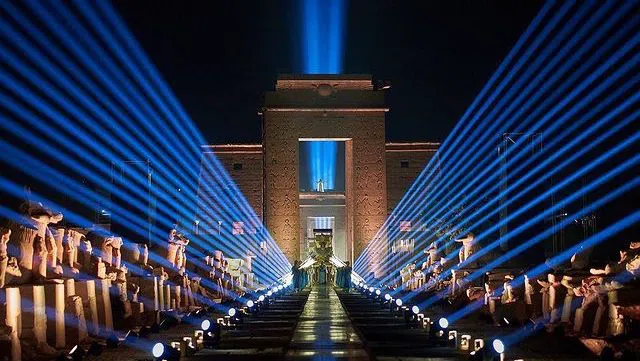
Finish at Luxor Temple (East Bank, on the Corniche beside the souk), the one major site open until 21:00 and therefore the correct evening slot for a trip built around not baking at midday. Entry is EGP 500. It is far quieter after 19:00 once the day tours have gone, and seeing it lit is a better use of the temple than burning a morning on it. If you want Karnak a second time without walking it again, its Sound & Light show runs at 19:00, 20:15 and 21:30 with rotating languages, about EGP 300 on top of the day ticket: a low-effort second look on another evening, not the same night.
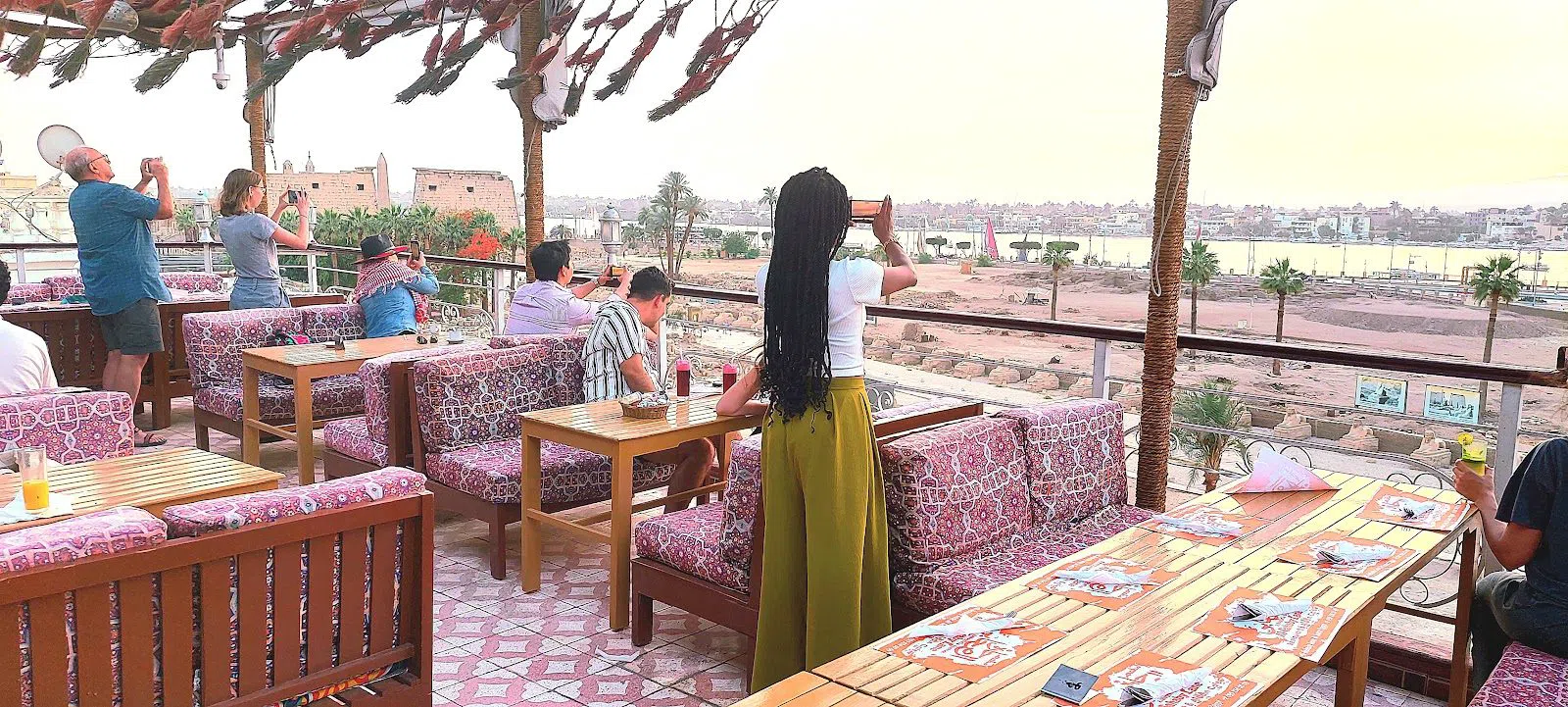
Dinner is Al-Sahaby Lane Restaurant (East Bank, a short walk from Luxor Temple), family-run since the 1920s, mains roughly EGP 120 to 280. The roof takes groups; ask for a temple-side table when you book. The view does the work, which is exactly what you want on the evening of a 06:00 start.
Day two on the West Bank, where three tombs beats six
Cross early and be through the gate at the Valley of the Kings (West Bank, in the desert wadi behind the cliffs) by 07:00. The standard ticket is EGP 750 and covers three tombs from the daily rotation; KV62 (Tutankhamun) is +EGP 700, KV9 (Ramesses V/VI) +EGP 220, and KV17 (Seti I) +EGP 2,000. Check the rotation board at the visitor centre before you choose. Which tombs are open changes, and the board is the only accurate source on the day.
Three tombs done properly beats six done badly, and the reason is physical rather than aesthetic. The interiors are unventilated and stack up heat and bodies fast; by the fourth descent most people are looking at their feet. Coach traffic builds from about 08:30. Guides are not permitted to lecture inside the tombs, so any briefing happens at the entrance. A good guide is therefore worth most before you go in, and you should expect to walk the chambers yourself in silence.
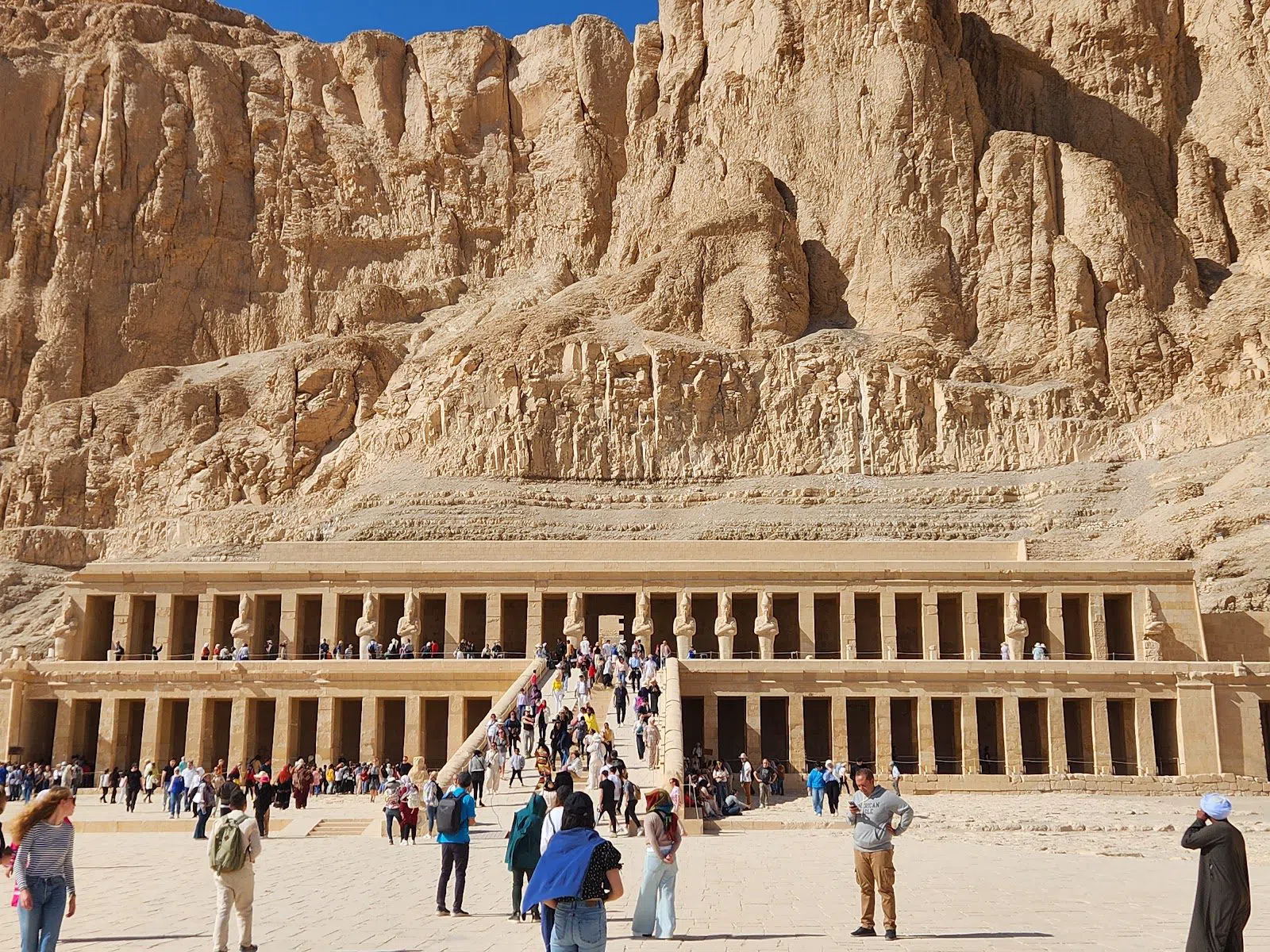
Next, the Temple of Hatshepsut (West Bank, at Deir el-Bahari beneath the cliffs), EGP 440, open 06:00 to 17:00. A shuttle runs from the car park to the base of the ramp and it is worth taking. This is a real heat trap, with the rock face reflecting the sun back onto the terraces, so it is a first-thing site or nothing at all. If the morning is already slipping, drop it rather than doing it at eleven.
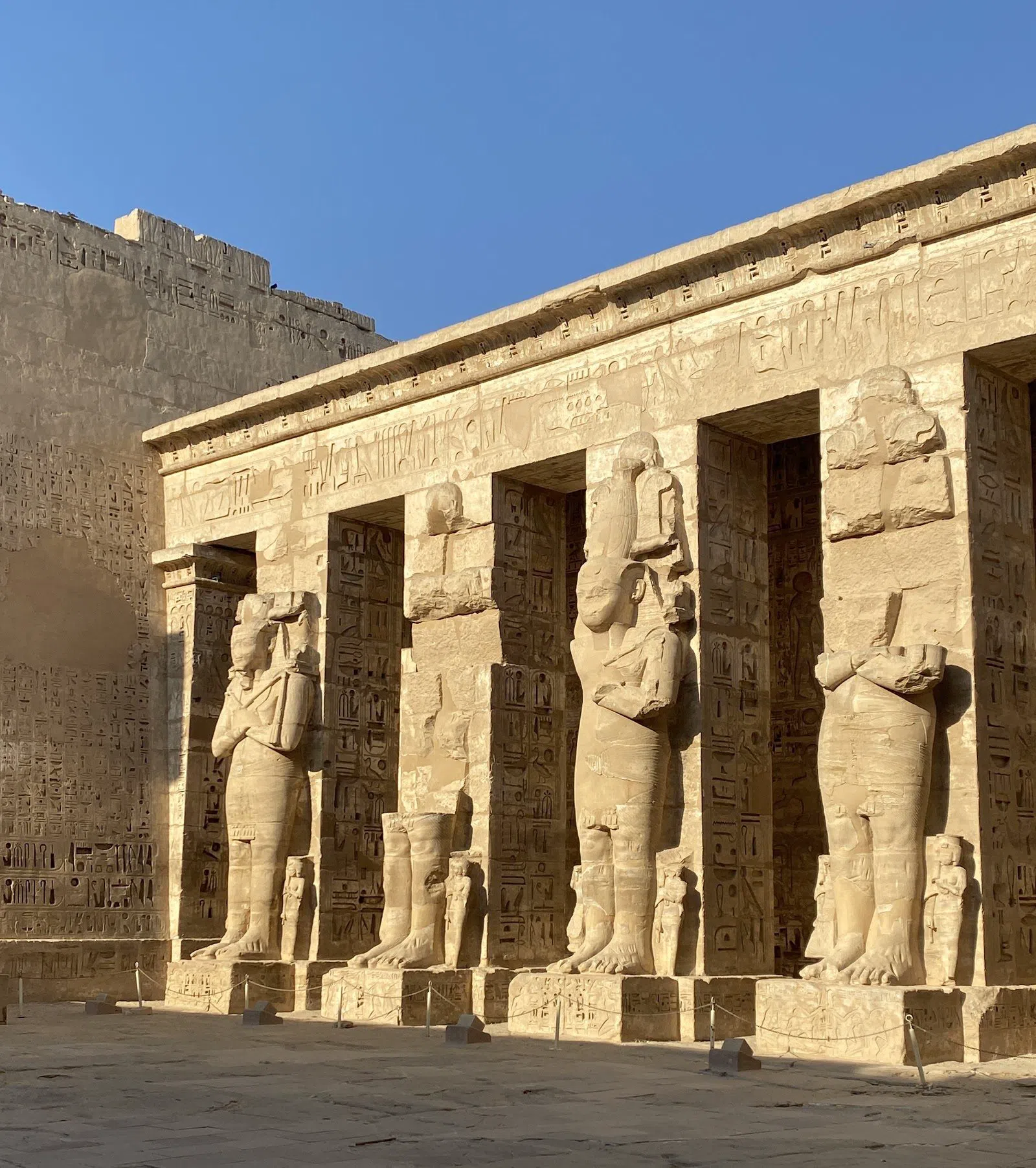
The site most people remember a year later is Medinet Habu (West Bank, at the southern end of the necropolis), EGP 220, which holds the best-preserved colour on this side of the river. It is relatively empty until about 08:30 and takes groups comfortably. Trading one extra Valley tomb for Medinet Habu is the best swap available in Luxor.
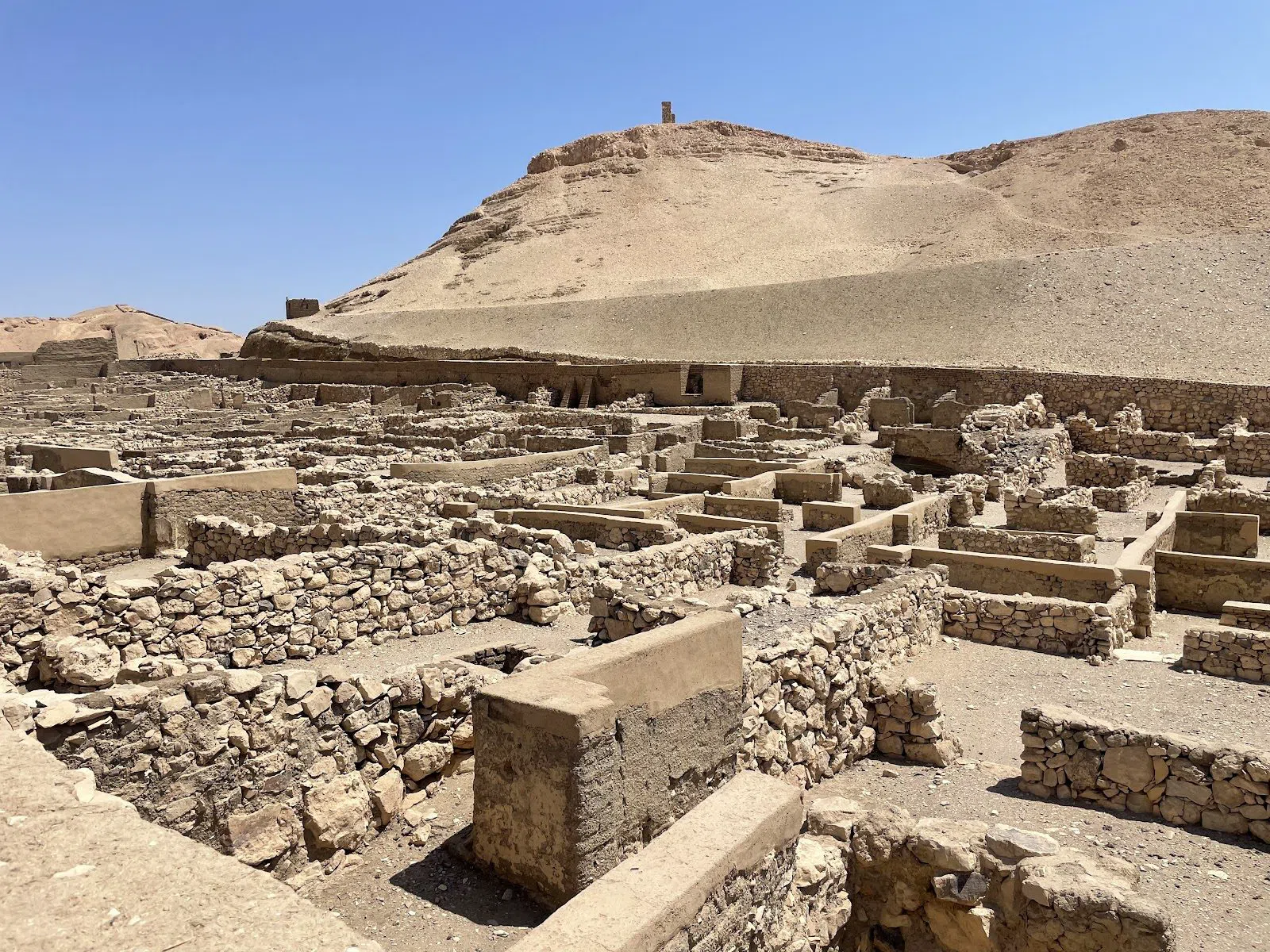
Close with Deir el-Medina (West Bank, the artisans' village between the two valleys), EGP 220, which includes TT1 Sennedjem, TT359 Inherkhau and the TT218/219/220 triple tomb; Pashedu is a separate ticket. These are painted rather than carved, and the scenes are domestic rather than royal propaganda: the people who dug the royal tombs, showing their own lives. It is short, shaded and low-effort, which makes it the right last stop before the ferry back. The chambers are tiny, so groups go in a handful at a time and a party of ten should budget waiting time.
Day three does its job by doing less
The dawn balloon belongs here, not on a Valley morning. Sindbad Balloons (hotel pickup either bank, launching over the West Bank fields) has flown since 2004 with ECAA-licensed pilots and runs one flight a day, every day of the season: 05:30 pickup, 06:30 launch, €100 standard, €120 deluxe, €150 comfort per person. Standard baskets carry up to 28, Comfort caps at 20, and private charters are available. The catch for a paced trip is that 05:30 pickup, which is exactly why it should not share a morning with a 07:00 tomb gate.

Then take the rest of the day off, deliberately. A day-use room and the pools or spa at the Hilton is the honest way to do that; so is a long lunch and a bed. You have seen the two biggest things in Luxor properly and you have one evening left to enjoy rather than endure.
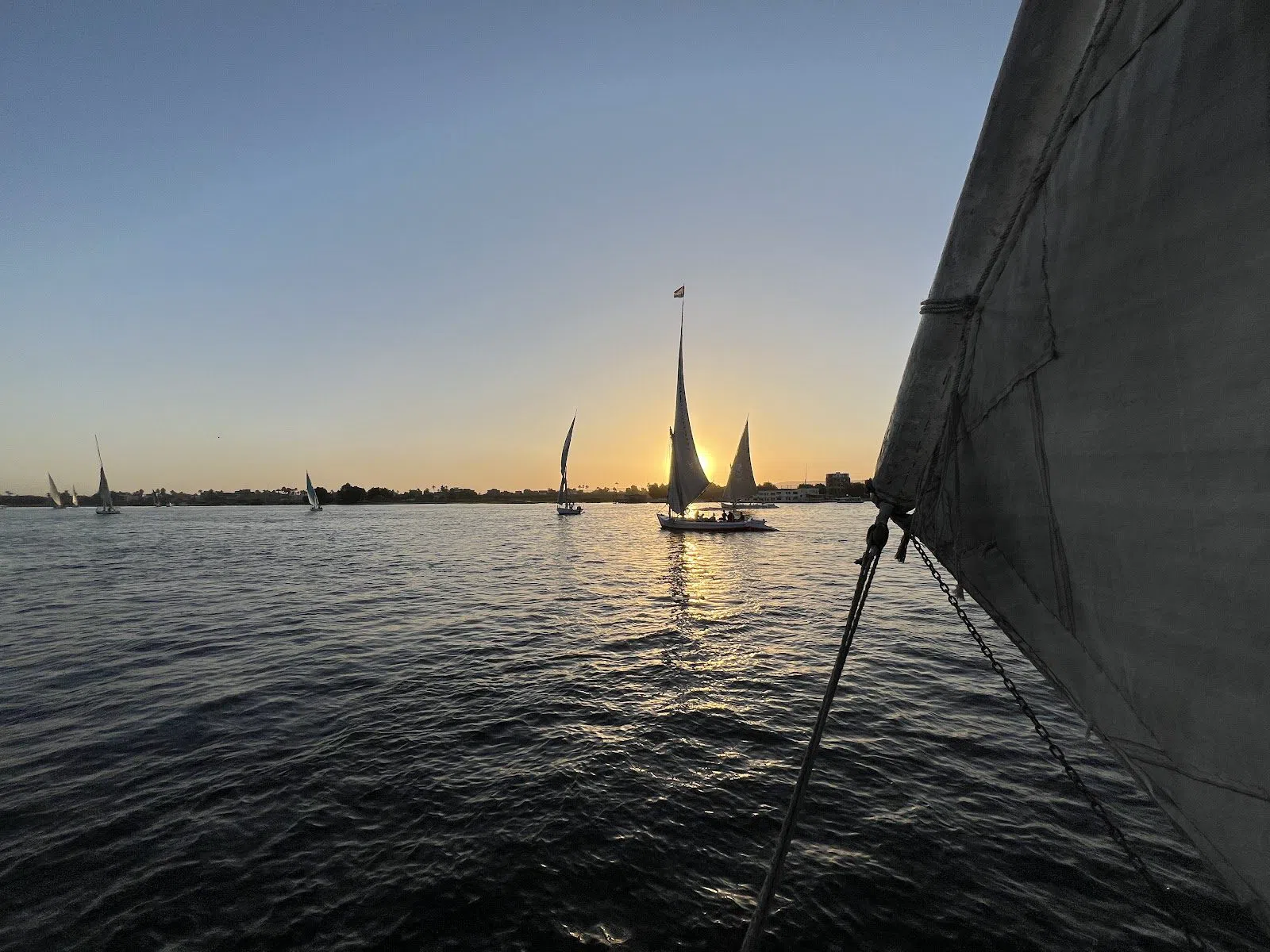
Spend that evening on the water with Felucca Honey Bunny (Captain Emad, moored on the East Bank Corniche), private hire by the boat, roughly EGP 400 to 800 for a two-hour sunset sail, best for two to eight people, with a Banana Island stop around EGP 200 per person extra. It is wind-powered and silent, and that is the whole point. An hour of doing nothing on the Nile is what makes the third day work.
Dinner is Sofra Restaurant & Café (East Bank), mezze and mains roughly EGP 150 to 350 per dish: long-standing, consistently good and properly local cooking rather than hotel-buffet Egyptian. Ask for the roof terrace. Evening tables go days ahead, so for anything above four people, reserve well in advance instead of turning up.
What each place does with groups
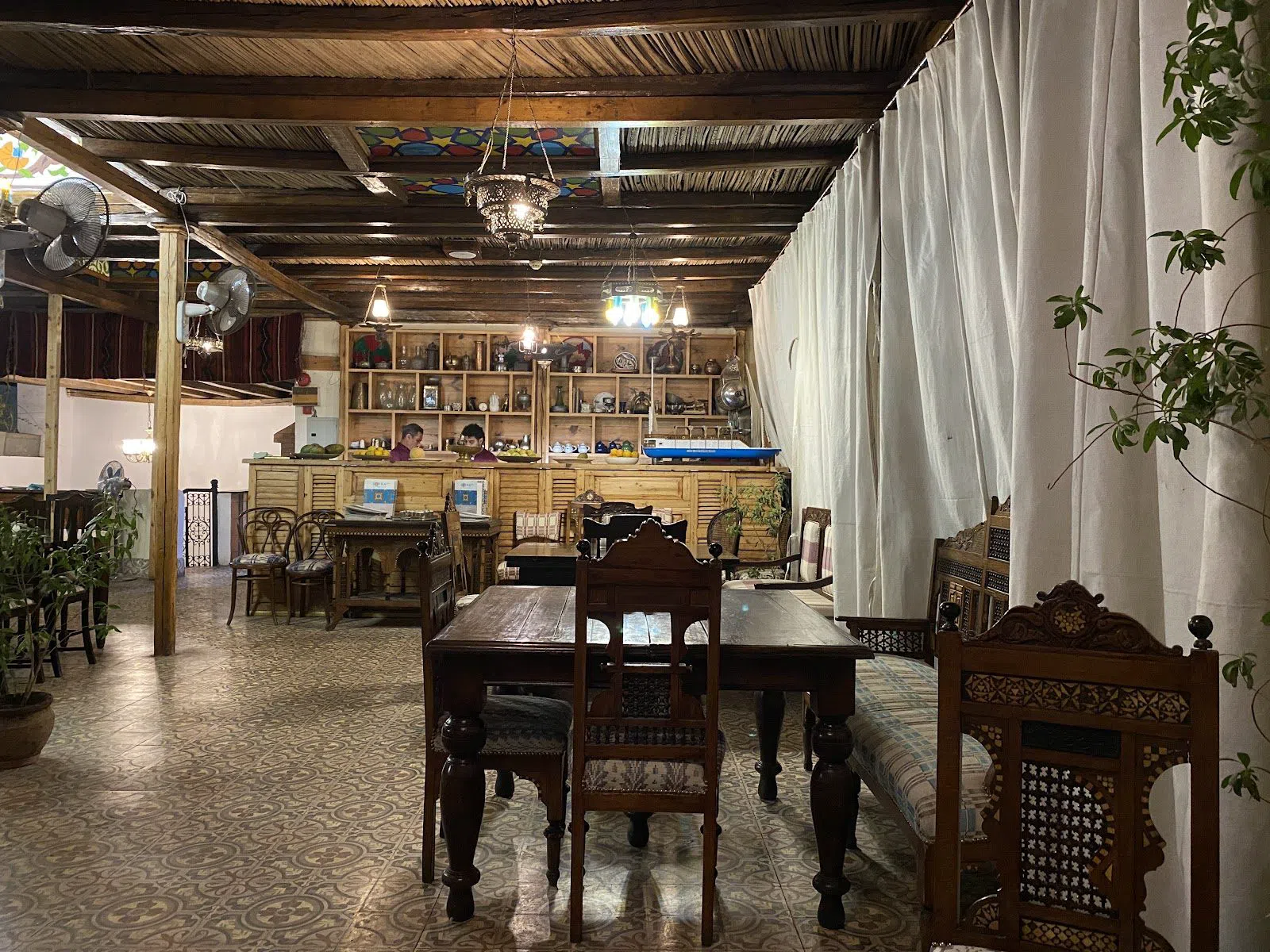
The big-ticket sites are indifferent to party size. Karnak, Luxor Temple and the Valley of the Kings take groups of any size, and the only real rule is that private guides must be licensed. The friction is at the small places. Deir el-Medina's painted chambers hold a handful of people at a time. The Luxor Museum asks large parties to split. Felucca Honey Bunny is a private boat comfortable for two to eight, not a coach transfer. Al Moudira accepts groups and private events but is a quiet property where a loud party will be conspicuous. Al-Sahaby Lane takes groups on the roof; Sofra takes them too, with notice.
Couples have it easier everywhere except the balloon, where a standard basket of 28 is a shared experience and a private charter is the only way around it.
Money, transport and timing
Carry Egyptian pounds in small notes. The ferry is EGP 25 and nobody at the gangway wants a large bill; the felucca, the tips and the smaller site tickets are all cash-friendly. Draw what you need on the East Bank and assume you will not find a working machine at the exact moment you want one on the West.
Entrance fees are the real budget line, not transport. A three-day plan along these lines comes to roughly EGP 600 for Karnak, EGP 500 for Luxor Temple, EGP 400 for the museum, EGP 750 at the Valley of the Kings, EGP 440 at Hatshepsut and EGP 220 each at Medinet Habu and Deir el-Medina, a little over EGP 3,100 per adult before any premium tomb. Add KV62 at EGP 700 or KV17 at EGP 2,000 only if that specific tomb is why you came. The Avenue of Sphinxes costs nothing.
For timing: two 06:00 starts across three days is sustainable; three is not. Book the balloon and Sofra ahead, check the tomb rotation board on the day, and let the ferry rather than a taxi handle the river. If you want to go deeper on the city before you build the plan, the Luxor guide covers the wider ground. Everything else here comes down to one decision made repeatedly: do the hard thing early, and give the middle of the day back to yourself.
Before you go
Is three days actually enough for Luxor?
Yes, if you do two big things a day rather than four. One site early, one in the evening, with the middle of the day off, covers Karnak, Luxor Temple, the Valley of the Kings, Hatshepsut, Medinet Habu, Deir el-Medina and the Luxor Museum, and nobody is wrecked by day three. Add a fourth stop to each morning and you will leave exhausted having looked at nothing properly.
Should I stay on the East Bank or the West Bank?
Stay on the West Bank if the tombs are your priority: Marsam Hotel from €35 to €160 per room with breakfast, or Al Moudira from around $455 per suite, both of which save two river crossings a day. Stay on the East Bank if you want resort facilities and evening restaurants nearby; the Hilton Luxor Resort & Spa also sells day-use rooms, a decent way to buy an afternoon of shade mid-trip.
How many tombs should I buy at the Valley of the Kings?
The EGP 750 standard ticket covers three tombs from the daily rotation, and three seen slowly beats six rushed. The interiors are unventilated and get hotter and busier as the morning goes on. Add KV62 Tutankhamun (+EGP 700), KV9 Ramesses V/VI (+EGP 220) or KV17 Seti I (+EGP 2,000) only if that tomb is the reason you came, and check the rotation board at the visitor centre first.
What is the best way to cross the river?
The public ferry, which leaves roughly every 30 minutes from in front of the Luxor Museum and costs EGP 25 one-way at the tourist fare. There is no booking and rarely a queue, and it cuts out the long road detour over the bridge. A private motorboat costs EGP 100 to 200 one-way if you want to leave on your own schedule. Taxi drivers will tell you the ferry is not an option; it is.
When should I do the hot-air balloon flight?
On a morning when you are not also visiting the Valley of the Kings. Sindbad Balloons picks up at 05:30 for a 06:30 launch, and if you put that in front of a 07:00 tomb gate you will have nothing left for the rest of the day. Prices are €100 standard, €120 deluxe and €150 comfort per person. Standard baskets carry up to 28 people, and private charters are available for couples who want the basket to themselves.